
Acne Treatment in Scottsdale for Adults Who’ve Already Tried Everything
Adult and hormonal acne plans with Nurse Bea. Free 60-90 minute consultation.
If you’re searching for acne treatment in Scottsdale at 32, or 38, or 45, you probably didn’t expect to be here. Teen acne was supposed to be over. Instead you’ve got breakouts along your jaw that come back every month, a bathroom shelf of products that half-worked, and maybe a dermatologist visit or two that ended in a prescription and no explanation.
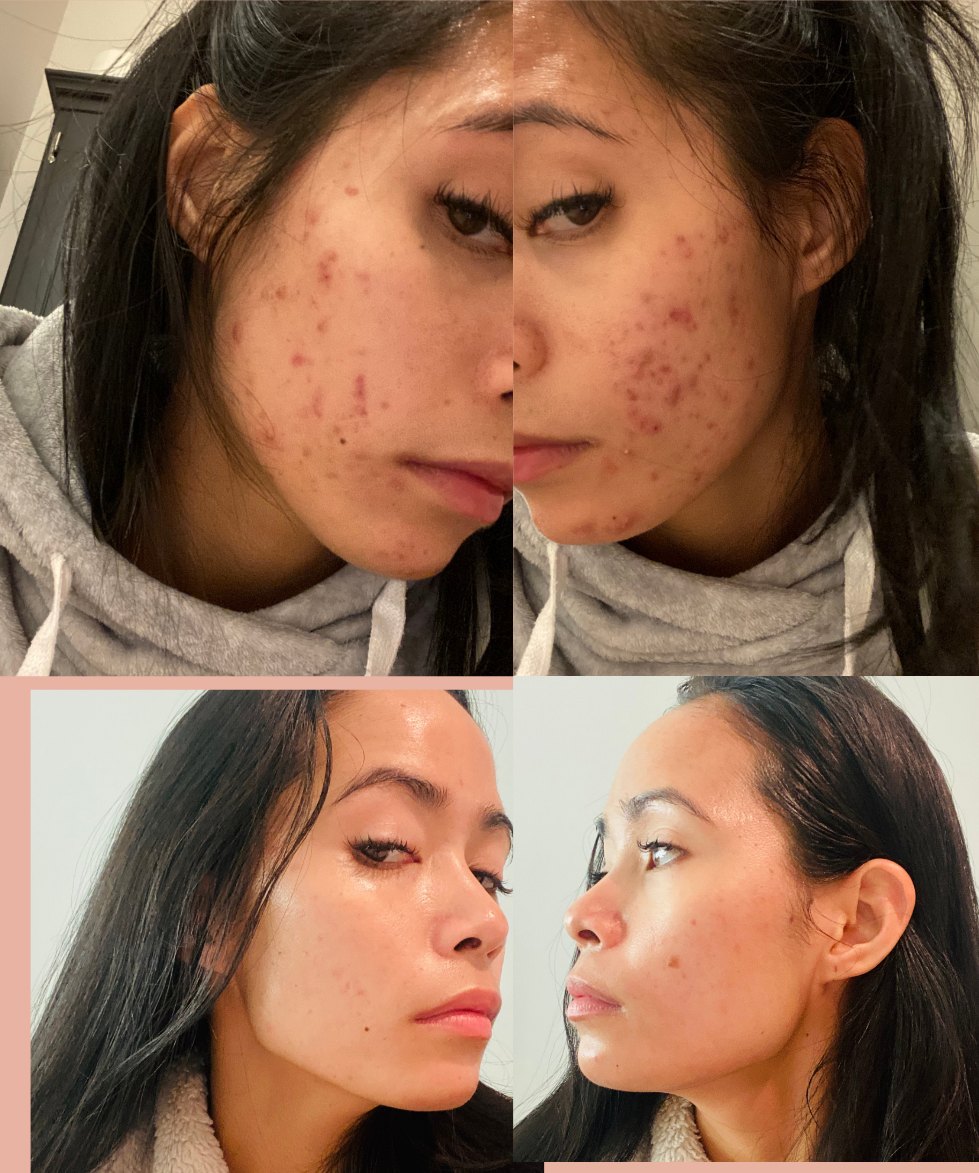
I’m Beatrice Moorefield, an aesthetic registered nurse and licensed aesthetician, and I went from mild to severe acne at 30 after stopping oral contraceptives. I bounced from medspa to medspa, spent thousands I didn’t have, and still saw almost no improvement. What finally worked wasn’t one treatment. It was finding out what was actually causing my acne and treating every part of it at the same time. That’s what we do at Skin With Bea Esthetics, and it’s why clients who’ve been dealing with acne for years usually see real improvement within three to six months of their first visit.
Schedule your free consultation — new clients hold their spot with a $50 deposit, credited to treatment or refunded after the visit.











Why am I getting acne in my 30s?
Adult acne is usually driven by hormone fluctuations, stress, the wrong skincare products, or a combination of all three, and women get it more often than men. It’s a different problem from teen acne, so the drugstore routine that worked at 16 often makes it worse at 36.
The American Academy of Dermatology lists the usual suspects: fluctuating hormones, stress, family history, hair and skin care products, and medications, and it names one trigger I know personally, hormone shifts “after discontinuing (or starting) birth control pills.” The products one is underrated. A surprising number of clients come in using something that’s clogging their pores or stripping their skin barrier, which makes the skin produce more oil, which makes the acne worse. That’s why the first thing I do is look at what’s on your shelf, not what’s on mine.
Is my acne hormonal, and how is hormonal acne treated?
Hormonal acne tends to show up as deep, tender bumps along the jawline, chin and lower cheeks, and it flares on a cycle: before your period, after coming off the pill, during pregnancy or perimenopause. It’s treated by calming the skin’s response to those hormones with the right topicals and in-office care, and, when it’s needed, with prescription support from a provider who can prescribe.
I want to be precise here, because “hormonal acne” gets used loosely. As an RN and esthetician I don’t prescribe, and I’ll say so plainly. What I can do is tell you whether your pattern looks hormonal, build the skincare and treatment side of the plan, and work alongside your dermatologist or our Medical Director, Abbey Jensen, MSN, FNP-C, if a prescription is part of the answer. The AAD’s own timeline for prescription adult-acne treatment is fewer breakouts in 4 to 8 weeks and clearing at about 16 weeks, which is why a plan matters more than a single bottle.
What is the most successful treatment for acne?
A combined plan that treats every stage of acne at once, kept up for three to six months. No single product or treatment does all of that on its own, which is why “I tried X and it didn’t work” is the sentence I hear most at consultations.
Acne isn’t one thing. It develops when pores become clogged, and behind that there’s excess oil, a bacteria that feeds on it, and the inflammation your skin throws at the bacteria. Then, once a breakout heals, the sun darkens the mark it leaves behind. A plan that only hits one of those stages leaves the others running. Here’s how we cover all of them:
| Stage of acne | What it looks like | At home | In the clinic |
|---|---|---|---|
| Excess oil | Shine by noon, enlarged pores | Low-pH gel cleanser, niacinamide | Professional exfoliation in the acne facial |
| Clogged pores | Blackheads, small bumps, texture | Retinol or azelaic acid at night | Enzyme or acid exfoliation (extractions only when they’re safe — see below) |
| Bacteria | Red, pus-filled pimples | 2.5% benzoyl peroxide, sulfur spot treatment | LED light therapy |
| Inflammation | Deep, sore, cystic bumps | Barrier-repair moisturizer, azelaic acid | Calming mask, LED; referral if prescription-strength care is needed |
| After the breakout | Dark spots that linger for months | Tinted SPF 30+ every morning | Peels and, once clear, microneedling or laser for scars |
The last row is the one everyone skips. The AAD is blunt about it: sunscreen can prevent new dark spots and help clear existing ones, and a spot that’s only a few shades darker than your skin “will usually fade within 6 to 12 months.” Without SPF you’re treating acne and manufacturing dark spots at the same time.
What actually happens at an acne consultation here?
You get about an hour and a half with me, it’s free, and most of it is questions. I want to know what’s causing your acne before I touch your skin, because the plan that works for you depends entirely on the answer.
This is the part I’d put in my own words, because it’s the reason I’ve been able to clear my own acne and a lot of my clients’ when other places couldn’t. I had a client recently who had been dealing with acne for many, many years. She’d been to dermatologists. She’d been to estheticians. Nobody had taken the time. So I took it: what have you tried, what didn’t work at all, what worked a little, what products are you using right now, what’s your cycle like, what’s your stress like, what does a normal week look like for you. Half of what I learn in that conversation is the wrong product or the wrong ingredient quietly undoing everything else.
Then I explain it back. People are surprised by how much that alone helps; once you understand why your skin is doing this, the plan stops feeling random. And the plan has to fit your life. I’m matching it to what you’ll actually do and what’s sustainable, not to an ideal routine you’ll abandon in three weeks. By the time you leave, you know what you’re doing at home, what we’re doing in the clinic, how any prescription from your dermatologist fits in and how to use it properly, and which ingredients you need to avoid so none of it works against the rest. Most of the time, no matter how stubborn the acne has been, we see real results within three to six months. The best part of this job is the person who’s been to everyone, finally sees her skin change, and knows how to keep it that way.
What is the Acne Clearing Program?
It’s my step-by-step plan for clearing acne, matched to how severe yours is: a 1-month, 3-month, 4-month, 6-month or 8-month program. We choose the length together at your free consultation, and every program pairs your home routine with treatments here in the clinic.
Visits are usually every two, three or four weeks, depending on how much your skin can handle. Some skin is ready every two weeks; some needs more time between treatments, and I won’t rush it. Milder acne usually needs a shorter program, and more severe acne a longer one.
Is a facial a good idea if I have acne, and which kind?
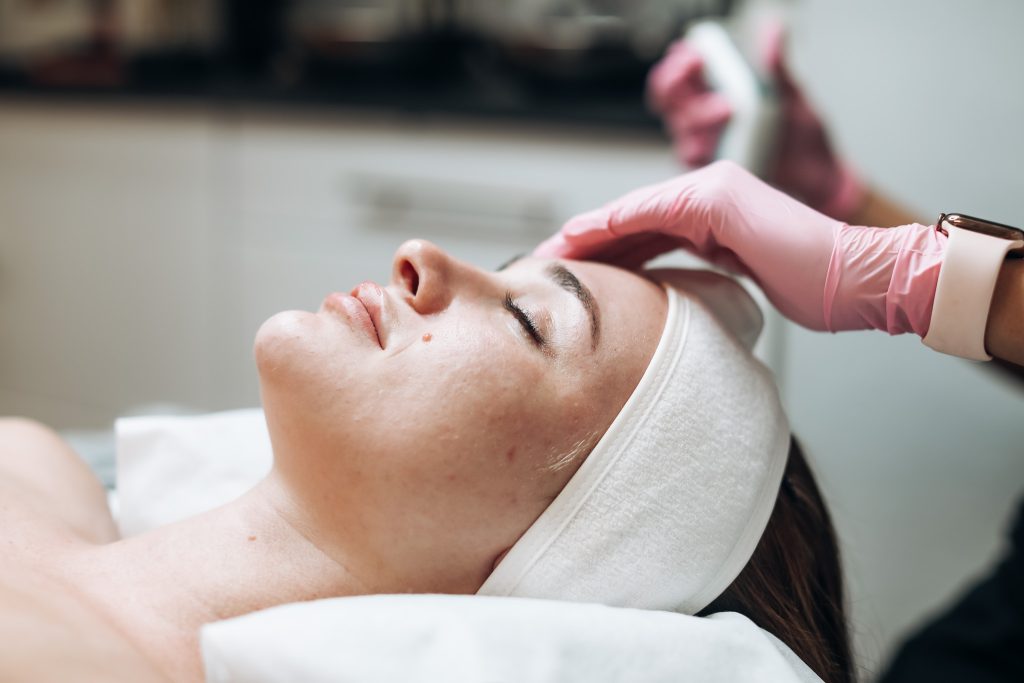
Yes, if it’s a corrective acne facial built for your skin rather than a relaxation facial. Ours is a 90-minute treatment with professional exfoliation chosen for your skin, a targeted mask and 30 minutes of LED, and nothing fragranced or pore-clogging goes near your face.
The reason a spa facial can make acne worse is that it’s designed to feel good, not to treat anything: heavy oils, steam on inflamed skin, massage over active breakouts. Our personalized facial starts with a double cleanse, uses enzymes or acids based on what your skin can handle that day, and finishes with red and near-infrared LED, which the AAD notes can treat pimples but not blackheads, whiteheads or cysts, which is exactly why it’s one step in the plan and not the plan. Clients who want to keep the LED going between visits use the Omnilux Clear mask at home.
Extractions here are a judgment call, not a default. If a breakout is the kind that comes out easily once the skin is softened, I’ll extract it; if extracting it could leave a scar that outlasts the pimple by years, I leave it alone and treat it so it clears on its own. Not every blemish is extractable, so we clear congestion with exfoliation and the right home care, and if you’re in the middle of a cystic flare, we calm things down first.
Esthetician or dermatologist for acne: which do I need?
Often both, and they do different jobs. A dermatologist diagnoses and prescribes; a licensed esthetician treats the skin itself, builds your routine, and sees you every few weeks to adjust it. The clients who do best usually have the prescription and the plan.
What I offer that a 10-minute dermatology appointment usually can’t is time: the consultation above, the facial series, and someone checking your routine as your skin changes. What a dermatologist offers that I can’t is a prescription, and I’ll send you to one without hesitation if you need it. The AAD’s guidance is that if you’re not seeing results after weeks of treatment, or you have large, painful pimples deep in the skin, or acne that leaves scars, it’s time to see a dermatologist. I’d rather tell you that at the consultation than sell you a facial that won’t fix a problem that needs medication.
Can acne scars be treated at the same time as active acne?
No. We clear the acne first, then treat the scars, because scar treatments like microneedling and laser work on healed skin, and new breakouts keep making new scars. Trying to do both at once wastes money on the scar side.
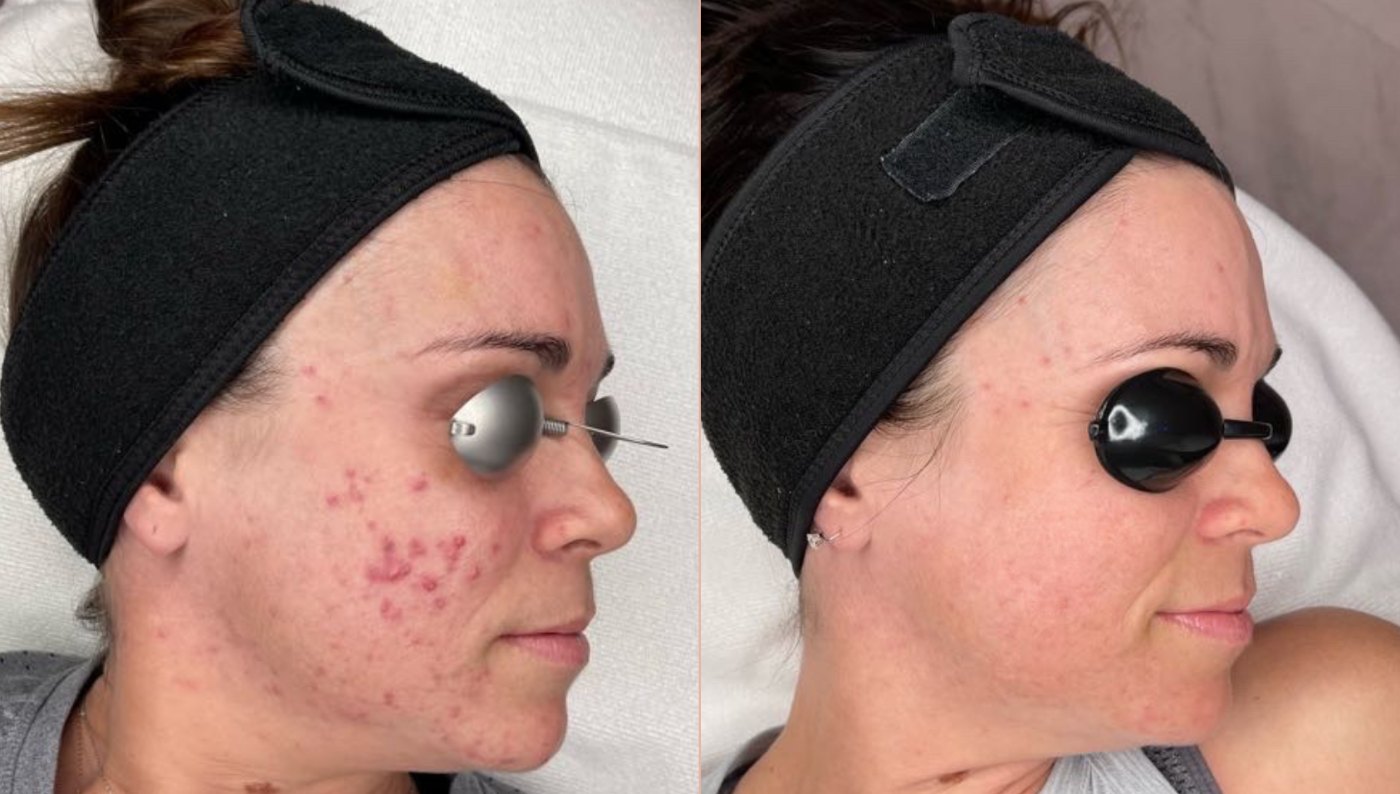
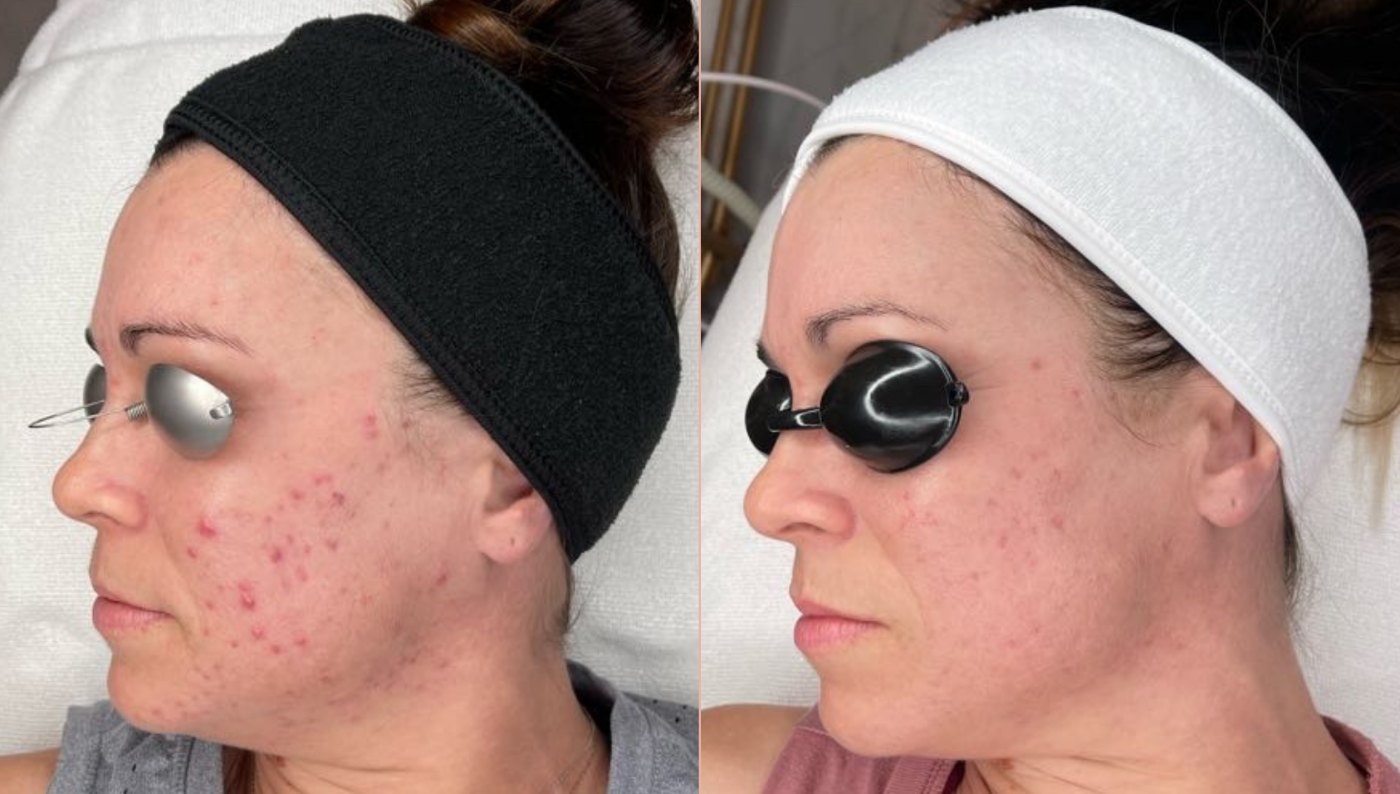
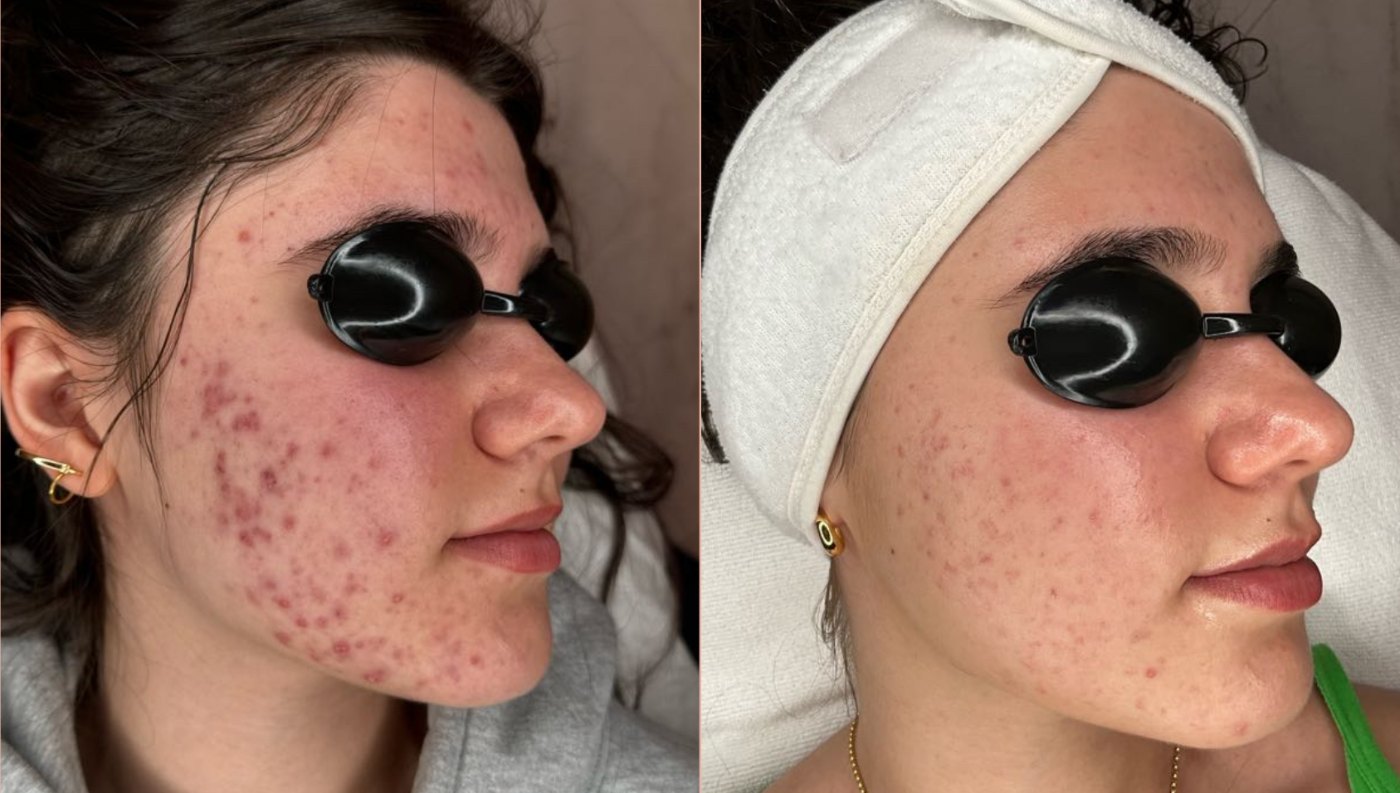
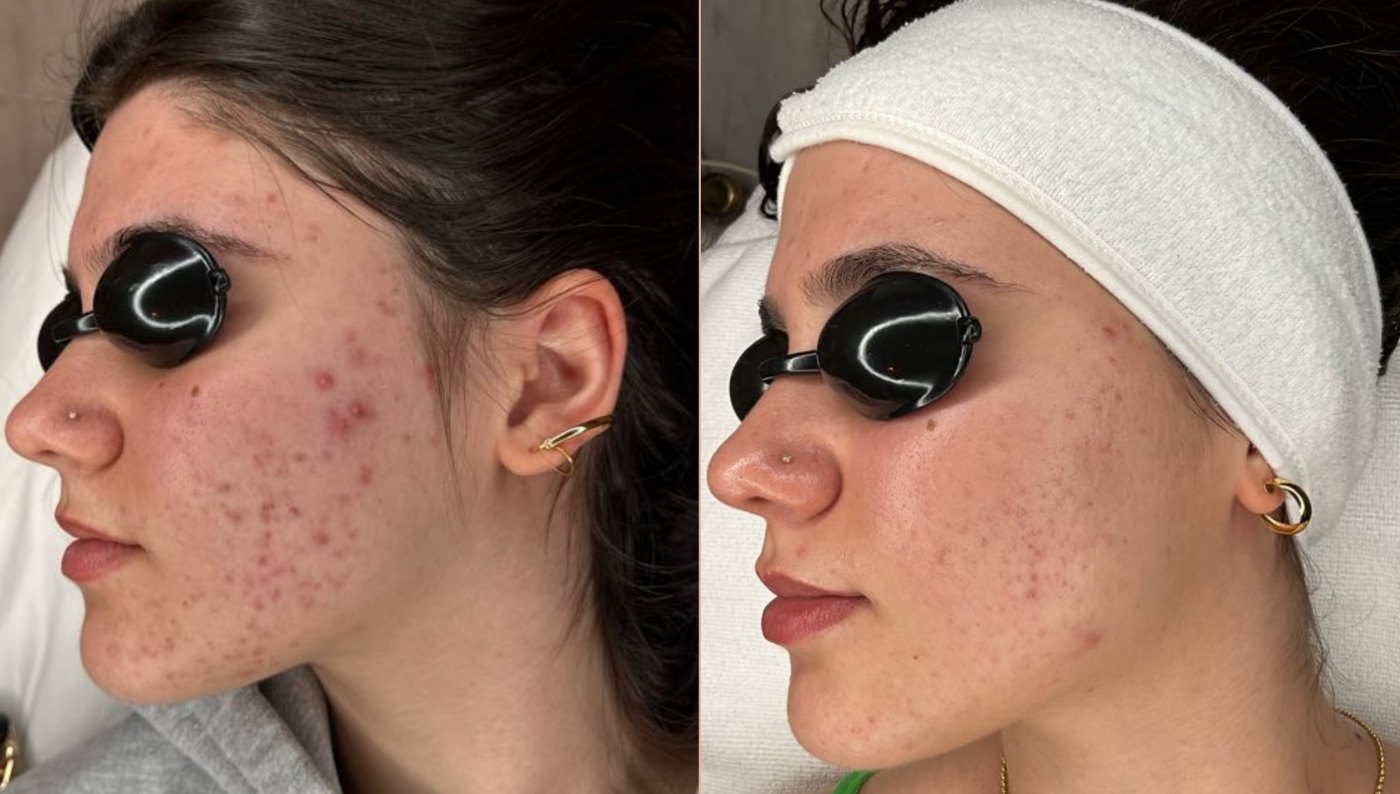
Once you’ve been clear for a few months, the acne scar treatment conversation is a good one to have. Shallow rolling scars and texture respond to microneedling; deeper scars and skin laxity are what Genius RF microneedling is for; and lingering redness and dark marks respond to laser resurfacing. Each has its own page, and the consultation will tell you which, if any, you need. Here’s an acne scar before and after from a six-month program.
How long does acne treatment take, and how much does it cost in Scottsdale?
Fewer breakouts usually show within four to eight weeks and real clearing takes three to six months, because skin turns over slowly and every stage has to be treated. The consultation is free, and the personalized acne facial starts at $179 if you choose to add in-office treatment.
I want to say something plainly about money, because I remember what it felt like to spend thousands on my skin and feel like every clinic saw my insecurity as an opportunity. If you’re a new client, booking takes a $50 deposit. That exists for one reason: it holds the appointment, and the only time we keep it is if you don’t show up, because an empty 90-minute slot is a client I couldn’t see. Once you’ve been in, you won’t be asked for one again. After the consultation the $50 goes toward any treatment you choose, and if you decide to do the plan at home on your own, tell us and we’ll refund it to your bank. That’s a real option: the home-care plan alone may well get you the result you’ve been after. Pairing it with in-office treatment and seeing me regularly usually gets you there faster, but without it you may just need a little longer. I’d rather you clear your skin on your own terms than feel sold to.
The timeline isn’t me being cautious. The AAD tells people to give any acne treatment six to eight weeks before judging it, and that’s for one product. A full plan compounds, so the second and third month are where it shows. On cost, your home-care products are priced separately and chosen for your skin; I keep the retail side affordable on purpose and you’ll never be pressured to buy. We price the series and the routine together at the consultation so you know the full picture before you start.
Benzoyl peroxide or salicylic acid: which should I use?
Benzoyl peroxide if your breakouts are red and pus-filled, salicylic acid if they’re mostly blackheads and whiteheads, and often a low dose of both at different times of day. The mistake is using neither correctly, or using the strongest version of each and wrecking your barrier. Lasting redness and flushing with no blackheads can be rosacea instead, which needs a gentler plan: see my rosacea treatment guide.
The AAD’s split is simple: benzoyl peroxide “can help get rid of the excess P. acnes bacteria on your skin”, while salicylic acid works best on whiteheads and blackheads because it clears the pore rather than killing anything. For most adult skin I start with a gentle 2.5% benzoyl peroxide like the Face Reality Advanced Acne Med we stock, not the 10% that bleaches towels and burns, and a sulfur spot treatment for the occasional deep one. Which one, how often and where goes in your plan; it’s not a coin flip.
Does azelaic acid help acne and dark spots?
Yes, and it’s one of the few ingredients that does both, which is why it’s in a lot of my clients’ routines. It calms inflamed breakouts, keeps pores clearer, and fades the marks acne leaves behind, and it’s gentle enough for sensitive and darker skin tones. It’s also one of my go-to ingredients for melasma, used alongside a prescription and a tinted sunscreen.
The AAD lists azelaic acid among the ingredients that can fade existing dark spots and slow the production of melanin that causes them. We carry Derma Made Azelaic Acid, and for the morning side, a tinted mineral sunscreen like EltaMD UV Clear is the one I recommend most for acne-prone skin, because it protects the fading marks without clogging the pores you just cleared.
Looking for acne treatment near you in Scottsdale?
We’re at 7054 E Cochise Road B100, Scottsdale, AZ 85253, on the Paradise Valley side of Scottsdale, and we see clients from Phoenix, Arcadia, Tempe, Cave Creek, Fountain Hills and North Scottsdale. Hours are Monday to Friday 10am to 6pm and weekends 11am to 5pm, by appointment.
Every acne plan here follows the protocol of Beatrice Moorefield, RN, LE, LSO, an aesthetic registered nurse, licensed aesthetician and Certified Laser Technician who has had this exact problem herself, and is carried out by Bea or by a certified aesthetic registered nurse who is also a Certified Laser Technician on her team, with medical oversight from our Medical Director, Abbey Jensen, MSN, FNP-C. No upsells. No trendy gimmicks. Just honest, science-backed care, and a plan you can actually keep. You can see every treatment and price on our services page.
Schedule your free consultation or call (480) 405-0100. New clients hold their spot with a $50 deposit; after the visit it goes toward your treatment or is refunded on request.
More questions I get about acne
You have to use the right products consistently, but a home-only plan is a legitimate outcome of the consultation, not a failure to sell you treatments. Most plans run on a short list: a low-pH cleanser, benzoyl peroxide or sulfur for bacteria, azelaic acid or a retinoid for clogged pores and dark spots, a barrier-repair moisturizer and a tinted SPF 30+.
Yes. Mine did; I went from mild to severe acne at 30 after stopping oral contraceptives. A hormonal shift like that changes oil production and the plan has to account for it, which is why the consultation asks about your history before anyone touches your skin.
Only when it’s safe. Our corrective acne facial uses professional exfoliation chosen for your skin, a targeted mask and 30 minutes of LED, with nothing fragranced or pore-clogging. If a breakout is the kind that comes out easily once the skin is softened, I’ll extract it; one that could leave a scar is left alone and treated so it clears on its own. If you’d like extractions, add it to your booking notes.
We clear the acne first, then treat the scars, because microneedling and laser work on healed skin and every new breakout makes a new scar. Trying both at once wastes money on the scar side.
UltraGlo, the low-density setting of our Lutronic Ultra laser, is the one laser we use on skin with active inflamed acne. It is part of the acne program alongside your home routine, not a replacement for it.
Written by Beatrice Moorefield, RN, LE, LSO — aesthetic registered nurse, licensed aesthetician, skin health educator, and founder of Skin With Bea Esthetics, Scottsdale.
Disclaimer:
The information provided on this website is for general informational purposes only and is not intended as a substitute for professional medical advice, diagnosis, or treatment. Always seek the advice of a qualified healthcare provider with any questions regarding a medical condition or treatment. The content on this website is not intended to diagnose, treat, cure, or prevent any disease. Use of this information is at your own risk. We are not responsible for any adverse effects or consequences resulting from the use of any information provided.