
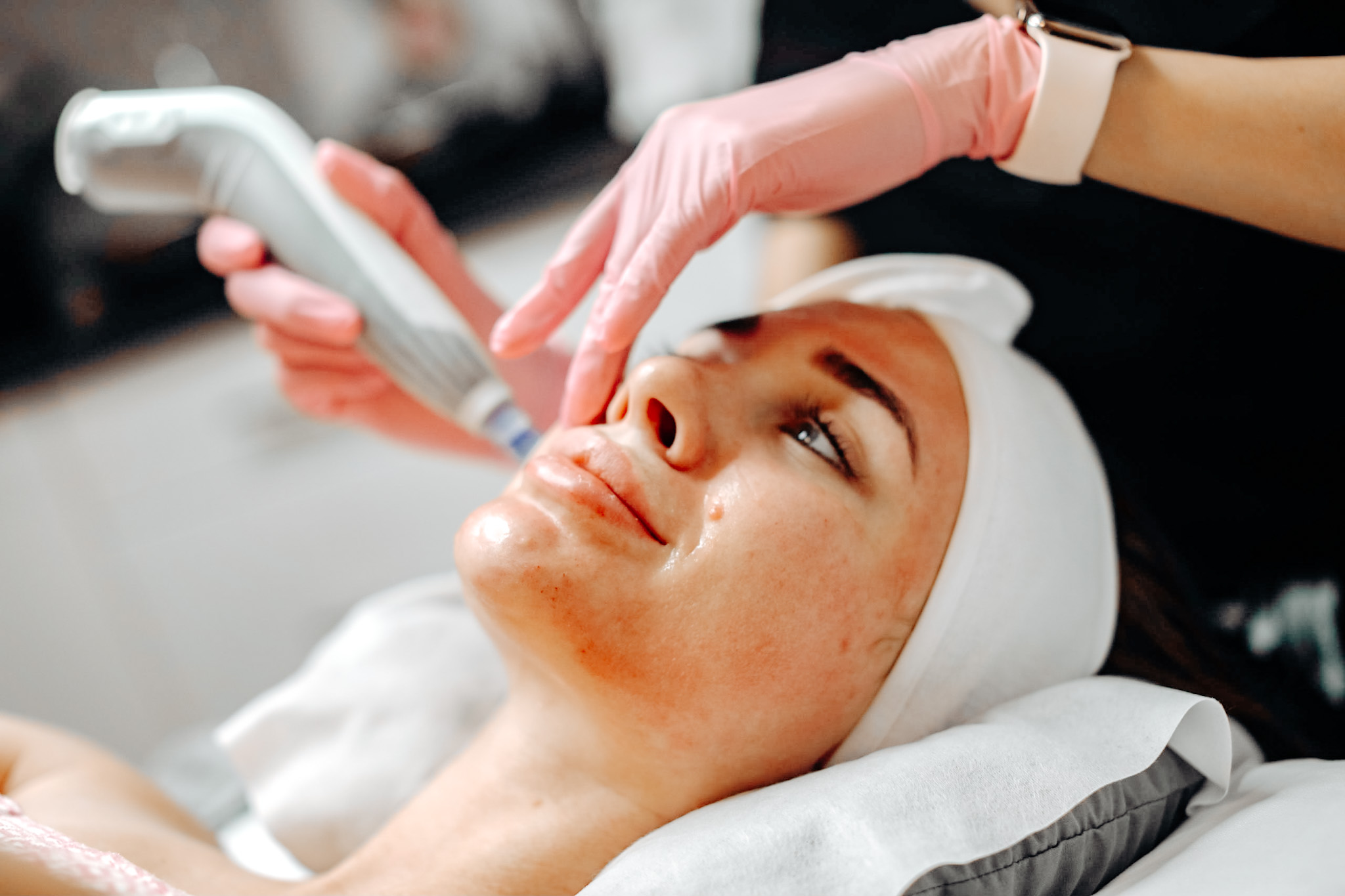
Microneedling in Scottsdale: Is It Worth It? An Honest Answer From the Nurse Who Does It
Dermapen 4 microneedling at two depths, with a free consultation first — and an honest answer if your money is better spent elsewhere.
If you’re searching for microneedling in Scottsdale, you’ve probably been told it’s good for everything: acne, scars, wrinkles, pores, “glow”. I’m Nurse Bea, an Aesthetic Registered Nurse and Licensed Aesthetician, and I do microneedling with the Dermapen 4 most days of the week. My honest answer is that it’s one of the best-value treatments I offer for the right skin, and a waste of your money for the wrong skin. This page explains which is which, what the two depths we use actually do, who I turn away, what it costs, and what I tell every client in the chair that no brochure mentions.
Schedule your free consultation — new clients hold their spot with a $50 deposit, credited to treatment or products, or refunded on request. Call (480) 405-0100 · 7054 E Cochise Road B100, Scottsdale, AZ 85253.











What is microneedling, and what does it actually do?
Microneedling, also called collagen induction therapy, uses a pen with a sterile cartridge of very fine needles to make thousands of controlled micro-channels in the skin. The FDA describes microneedling devices as instruments with many small needles that are repeatedly inserted into the skin, and the authorized uses are to improve the appearance of facial acne scars, facial wrinkles and abdominal scars in adults 22 and older. Those micro-channels trigger a wound-healing response: a peer-reviewed review describes minimal epidermal damage that releases growth factors and stimulates new collagen and elastin in the upper dermis. That is the whole mechanism. There is no heat, no light and no chemical doing the work; the needle depth and the health of your skin decide the result.
A “microneedling facial” in a spa and medical microneedling in a nurse-run clinic can be very different treatments, and the difference is depth. That is why we offer two.
Cosmetic vs Medical microneedling: the two depths we use
Cosmetic microneedling is the shallow, super-gentle pass. It needs no numbing, the whole visit takes about 1.5 hours, and it is the depth I use for active acne that is being managed, for early fine lines and sun damage, and for anyone whose skin I want to see respond before going deeper. My teenage acne clients tolerate it without a problem.
Medical microneedling is the deeper pass for mild acne scars, including ice-pick scars and the dark marks acne leaves behind. You are numbed for 30 minutes with prescription-strength cream first, so the visit takes about 2.5 hours. This is the depth the published scar studies are describing when they report 51 to 60% improvement in acne scars after six sessions.
| Cosmetic microneedling | Medical microneedling | |
|---|---|---|
| Best for | Active acne that is managed; early fine lines and first sunspots; a first session on deeper skin tones | Mild acne scars, ice-pick scars and post-acne dark spots |
| Numbing | None needed | 30 minutes, prescription-strength |
| Appointment | About 1.5 hours | About 2.5 hours |
| How it feels | About 2/10 | Mostly numb; 2 to 3/10 at most |
| Downtime | Pink for a few hours; back to work the same day | Pink 1 to 2 days; some dryness or flaking for a few days |
| Included | Dermapen 4, Über Peel, 10-minute soothing mask, 30 minutes of LED | Numbing, Dermapen 4, Über Peel, 10-minute soothing mask, 30 minutes of LED |
Deeper is not automatically better, and this is where I see other clinics ruin faces. A client came to me with a neck that was getting darker, not lighter, after two sessions elsewhere where the provider simply went deeper each time. You cannot go deeper on the neck. The darkening turned out to be caused by an underlying medical condition that needed a doctor, not a needle. Dark spots have different causes, and telling them apart is exactly what a nurse’s medical education is for.
What does microneedling treat, and what won’t it fix?
The American Academy of Dermatology lists what microneedling can diminish: acne scars, dark spots, large pores, melasma, sagging skin, surgical scars, stretch marks, uneven texture and tone, and fine lines and wrinkles. In my practice it earns its price for four groups: active acne that is under control, so the Cosmetic pass can calm it and clear old marks; mild acne scars, especially ice-pick scars and post-acne dark spots, at Medical depth; early signs of aging, meaning fine lines and the first sunspots; and people with deeper skin tones who want resurfacing without the pigment risk of a laser.
It is the wrong tool for a few things. Severe or deeply pitted acne scars respond better to our TotalSkin Solution, which combines RF microneedling and the laser. Age spots lift faster with the Laser Facial. Melasma is its own case, with a home-first plan where microneedling only joins at Cosmetic depth. Lines that only show when you move your face are a Botox job. And if your skin is already clear and even and you want microneedling “to maintain it”, you are better off with a good home routine; more on that below, because it is the most common conversation I have.
Is microneedling safe for dark skin?
Yes, and it is one of the main reasons I reach for it. A review of scar treatments in skin of color rates microneedling as Level I evidence, Grade A recommendation, and calls it safe and moderately effective in all types of acne scars in type III and V skin, a “color-blind procedure”. In a comparative trial of fractional laser against microneedling, 13.6% of the laser patients developed post-inflammatory hyperpigmentation while none of the microneedling patients did. The AAD puts it simply: microneedling is minimally invasive and safe for all skin tones.
Two honest caveats. First, “lower risk” is not “no risk”: a 2020 clinical update notes that microneedling is often considered the alternative to laser in Fitzpatrick IV to VI skin, yet post-inflammatory hyperpigmentation was still reported in 19 of the studies it reviewed. The risk comes from needling too deep and from skipping sunscreen afterwards, not from the tone of your skin, which is why I start deeper skin tones at Cosmetic depth and let your skin tell me when it is ready for more. Second, the Dermapen 4’s FDA clearance for acne scars is written for Fitzpatrick skin types I through V in adults 22 and older; for the deepest skin tones we discuss that at the consultation and plan the depth accordingly.
Does microneedling hurt, and what’s the real downtime?
Pain is about a 2 out of 10, 3 at the very most. Medical-depth clients get 30 minutes of prescription-strength numbing first and most barely feel it. Cosmetic depth is done without numbing and my teenagers sit through it fine.
Cosmetic depth has essentially no downtime. You are pink when the pen stops, but after the 10-minute soothing mask and 30 minutes of LED most people look almost healed and go back to work the same day; slow healers stay slightly pink into the evening. Medical depth leaves you pink for one to two days, and some people, not everyone, get a few days of extra dryness or flaking as the skin turns over. The FDA’s list of expected effects matches what I see: dryness, rough skin, tightness, redness, itching and peeling, all short-lived. The LED is not decoration: red and near-infrared light therapy has documented benefits for wound healing, wrinkles and acne scars, and it is the step that gets Cosmetic clients out the door looking normal.
How many microneedling sessions do I need, and how often?
It depends on what we are treating. Some people see a change after one session and some need up to twelve; old mild-to-moderate acne scars usually take six to eight. The published numbers sit in the middle: a review of needling studies for acne scarring found a median of three treatments spaced four weeks apart, and the AAD says acne scars may need three to five treatments, performed every two to four weeks. Microneedling can be repeated monthly, and the benefit accumulates, as long as the skin is fully healed between sessions. That last clause is the one people skip.
Two things I have learned the hard way. Clients who alternate microneedling with a laser facial get better results than clients who do three of the same treatment, so my acne-scar clients usually book a bundle of three Medical microneedling sessions alternated with three Laser Facials, which comes with an Omnilux LED mask and bonus skincare. My acne clients do the acne program instead: three Cosmetic microneedling sessions alternated with three UltraGlo laser facials, plus an at-home LED mask and a skincare routine, because without the routine the results do not hold. If you are not a laser candidate, microneedling alone still works; it just takes more sessions.
And the result depends on what you do at home more than people want to hear. My clients who already use a retinoid regularly and protect their skin from the sun get visible change early; the ones who do not often see nothing until many sessions in. That is not a sales line, it is why every microneedling client here leaves educated on how to use tretinoin properly.
Dermapen 4 vs SkinPen vs a dermaroller: does the device matter?
The two pens you will see in serious clinics are the Dermapen 4 and the SkinPen Precision. SkinPen was the first microneedling device the FDA authorized, granted in March 2018 to improve the appearance of facial acne scars in adults 22 and older, and it later added a neck-wrinkle indication. The Dermapen 4 received its own clearance, K221070, in December 2022, for facial acne scars in Fitzpatrick types I to V. Both use single-use sterile cartridges, which matters because the FDA is blunt that a cartridge must never be reused or used on more than one patient.
I chose the Dermapen 4 for a practical reason. Its 16-needle cartridge and digital depth control adjust to a maximum of 3 mm from buttons at the top of the pen, up by my hand. On many pens you change depth by twisting the tip, the end that has just been in your skin. I did not want to stop mid-treatment and handle that end, and I did not want to be tempted to skip depth changes to avoid it. I also use Dermapenworld’s Über Peel, the chemical peel designed to pair with their pen, because their acne protocol made more sense to me than the other acne programs I evaluated.
Dermarollers and cheap pens from Amazon are a different category. Most home rollers do not penetrate living skin, which is why the FDA says products that only exfoliate and do not penetrate are not regulated as medical devices; they cannot do what a clinical pen does. The ones that do penetrate are the problem: the AAD warns that at-home devices give less noticeable results and carry a risk of infection, scarring and spreading viruses. If you have been rolling at home, please stop, let your skin fully recover, and let us look at it before we treat.
What about adding PRP (the “vampire facial”)?
We don’t offer it, and here is my reason. The point of adding PRP is to speed up healing and push the collagen response a little further; a 2026 meta-analysis of 17 studies found a higher rate of excellent scar improvement with PRP added, while noting high risk of bias and non-standardized PRP preparations across the trials. In my experience the 30 minutes of Celluma Pro LED that is already included in every microneedling visit here does that same job: red and near-infrared light has documented benefits for wound healing, wrinkles and acne scars, with no blood draw and no extra fee. I can’t justify asking my clients to go through a blood draw and pay another $300 or so for a benefit I can see them getting from the LED. If a future study shows PRP clearly beats LED after microneedling, I’ll revisit it.
Microneedling vs RF microneedling: which one do I need?
Traditional microneedling uses needles alone. RF microneedling delivers radiofrequency heat through the needle tips, which reaches deeper, tightens skin and remodels deeper rolling and boxcar scars. If your concern is active acne, early fine lines, sunspots or mild scars and dark marks, start here; it is gentler, costs less and heals faster. If your scars are deep, your skin is lax, or you have already done a series of microneedling without the change you wanted, Genius RF microneedling or the TotalSkin Solution is the next step, and I will tell you so at the consultation rather than sell you more of the same.
Who should NOT get microneedling? The clients I turn away
Because of the way I set depth, I rarely have to turn anyone away from a microneedling facial; it is a safe treatment for sensitive skin as much as resilient skin. If your sensitive skin is actually rosacea, start with my rosacea treatment guide. But some people I will not treat that day, and a few I will not treat at all:
Acne that is not actually under control. This is the biggest trap I see. Someone’s breakouts “went away” on their own without treatment, they book scar needling, and the needling brings the acne back worse. Active inflammatory acne is a listed contraindication to microneedling. If you have been clear for years without medication, fine. If you have been lesion-free for a month and never treated the acne, that is still a risk, and we start with the acne program instead.
A cold sore or any active infection on the face. Active herpes labialis or other localized infection in the treatment area is an absolute no; the FDA lists herpes reactivation among the less common risks of the procedure.
Recent Accutane (isotretinoin). My rule is six months off. I’ll be transparent that this is stricter than the literature: a 2017 consensus found insufficient evidence to support delaying superficial peels, cutaneous surgery and fractional lasers in people on or recently off isotretinoin, and microneedling itself was not in that review, so there is no clear rule either way. I would rather wait than find out on your face.
A history of severe keloids. Extreme keloidal tendency is a contraindication.
Another skin treatment within the past week, or heavy sun exposure within the past week. Your skin has not finished healing from the last insult; we reschedule.
If you are pregnant or nursing, or take medication that affects healing, tell us at the consultation so we can plan around it.
What happens during the appointment?
The protocol is the same structure as our laser facial. We cleanse. If you are booked for Medical depth, we apply prescription-strength numbing for 30 minutes; Cosmetic depth skips this. Then the Dermapen 4 pass at the depth we agreed on, followed by Dermapenworld’s Über Peel, the mild peel formulated to be applied with their pen. Then a 10-minute soothing mask and 30 minutes of LED. Nothing goes on your open channels that is not meant to: there are published cases of facial granulomas after microneedling when non-sterile topical products were worked into the skin, and the authors’ conclusion is that topicals during microneedling should be limited to products approved for intradermal use. That is also why you should not put your own vitamin C serum on that night. Cosmetic visits run about 1.5 hours; Medical visits about 2.5 hours.
How much does microneedling cost in Scottsdale?
Cosmetic microneedling is currently $298 and Medical microneedling is currently $349, less per session when you buy a series. Both include the Dermapen 4 treatment, the Über Peel, the soothing mask and 30 minutes of LED; the Medical price includes the 30 minutes of prescription-strength numbing. Acne-scar clients usually buy the alternating bundle of three Medical microneedling sessions and three Laser Facials, which includes an Omnilux LED mask and bonus skincare; acne clients buy the acne program of three Cosmetic sessions and three UltraGlo laser facials with an at-home LED mask and a skincare routine. Ask about either at your consultation and we will price it for your skin rather than off a menu. The consultation is free. New clients hold their spot with a $50 deposit that goes toward treatment or products, or is refunded on request; it is kept only for a no-show. Nobody here works on commission, so nobody is paid to talk you into the deeper treatment.
Is microneedling worth it, honestly?
Here is the conversation I have at least once a week. Someone with beautiful skin comes in for microneedling because they read it builds collagen and elastin and is good for maintenance. I send them home with instructions for tretinoin and sunscreen instead, because that is what will actually maintain their skin, and it costs a fraction of a series. Tretinoin is the one topical with an FDA label for fine wrinkles, mottled hyperpigmentation and rough texture, used alongside sun protection. Nurses do not prescribe, so if you need one we will point you to a prescriber, and I will teach you how to use it without wrecking your barrier.
Microneedling is worth it when you have something specific to fix: fine lines and the first sunspots, acne that is managed but keeps leaving marks, or mild acne scars. It is worth more when you are already on a retinoid and wearing sunscreen, because that skin responds in fewer sessions. It is not worth it if you want it “for everything”, if your acne is not controlled, or if your scars are deep enough that RF or the laser would do the job in fewer visits. See microneedling before and after results on real clients in our acne transformation and acne scar treatment results.
Microneedling aftercare: what I actually insist on
Before: stop your retinoid three to five days before the appointment, and arrive with no sunburn and no other skin treatment in the past week.
After: no heavy sweating for two days. Makeup can go on the next day; if you can wait a full 24 hours, better. No deliberate sun exposure for the first week, then the rule that never changes: broad-spectrum sunscreen every day, and the AAD’s advice to reapply roughly every two hours when you are outdoors; if you don’t have one you like, UV Clear is the one we keep in the clinic. Do not pick at dry, flaky skin. It is best to skip alcohol while your skin is healing. And restart your retinoid as soon as the skin has healed, not a week later, because that is where a lot of the result comes from. If you have an at-home LED mask, use it; it supports the healing and the result.
Who performs microneedling here?
Microneedling here is performed by Beatrice Moorefield, RN, LE, LSO, an Aesthetic Registered Nurse and Licensed Aesthetician, or by a certified aesthetic registered nurse on her team who is also a Certified Laser Technician, following the same written protocol, with medical oversight from Medical Director Abbey Jensen, MSN, FNP-C. That double requirement is deliberate. A laser technician without a nursing license can legally perform these treatments in many places, and I still won’t hire one for microneedling or any energy device, because I know what goes wrong when someone is needled while on a medication, or with an underlying condition, that changes how their skin heals. Recognizing that before the pen touches your face is a nursing skill, and it is the part of the treatment you can’t see.
Looking for microneedling near you in Scottsdale, Paradise Valley or Phoenix?
We’re at 7054 E Cochise Road B100, Scottsdale, AZ 85253, on the Paradise Valley side of Scottsdale, and we see microneedling clients from Phoenix, Arcadia, North Scottsdale, Fountain Hills, Cave Creek and Tempe. Hours are Monday to Friday 10am to 6pm and weekends 11am to 5pm, by appointment. If you have been comparing microneedling Scottsdale clinics on price alone, come in for the free consultation first; the depth, the protocol and the person holding the pen are what you are actually paying for.
Schedule your free consultation or call (480) 405-0100. New clients hold their spot with a $50 deposit; after the visit it goes toward your treatment or products, or is refunded on request. Not sure microneedling is your treatment? See how a consultation works or start with a Personalized Facial.
More questions I get about microneedling
No. Microneedling works by triggering your own collagen response, and that response is still there at 40, 50 and beyond. Fine lines and the first sunspots are exactly what it is worth doing for. What matters more than your age is whether you are using a retinoid and sunscreen, because in my clients that is what decides how quickly the result shows.
The collagen you build is yours to keep, but your skin keeps aging and the Arizona sun keeps working against it. How often you maintain after a series depends on your skin and your home routine, so we decide it at your follow-up rather than from a menu; the clients on a retinoid and daily SPF go the longest between visits.
I would not. Home rollers either do not penetrate living skin, in which case they cannot do what a clinical pen does, or they do, and then you are rolling a reusable, non-sterile device across your face; the American Academy of Dermatology warns about infection, scarring and spreading viruses with at-home devices. If you have been rolling at home, stop, let the skin fully recover, and let us look at it before we treat.
Only at Cosmetic depth, and only if the acne is being managed. Active inflammatory acne is a contraindication for Medical-depth needling, and the biggest mistake I see is people whose breakouts went quiet on their own getting scar needling and breaking out worse. If your acne is not under control we start with the acne program and come back to needling once your skin is stable.
Makeup the next day, ideally after a full 24 hours. No heavy sweating for two days, because sweat and heat on open micro-channels invite irritation and breakouts. Sunscreen goes on from the next morning and every day after that.
No. Every microneedling visit here already includes 30 minutes of Celluma Pro LED, which supports healing and collagen in the same way PRP is meant to, without a blood draw or an extra fee of around $300. If the evidence changes, so will my answer.
Written by Beatrice Moorefield, RN, LE, LSO — aesthetic registered nurse, licensed aesthetician, skin health educator, and founder of Skin With Bea Esthetics, Scottsdale.
Disclaimer:
The information provided on this website is for general informational purposes only and is not intended as a substitute for professional medical advice, diagnosis, or treatment. Always seek the advice of a qualified healthcare provider with any questions regarding a medical condition or treatment. The content on this website is not intended to diagnose, treat, cure, or prevent any disease. Use of this information is at your own risk. We are not responsible for any adverse effects or consequences resulting from the use of any information provided.