
Under-Eye Wrinkles Treatment in Scottsdale: What Helps, What Doesn’t, and What I Won’t Sell You
Wrinkle, crease, hollow or dark circle? Each has a different fix, and two of them I’ll send you elsewhere for.
Under eye wrinkles are the first lines most people notice and the hardest to treat well, because the skin there is the thinnest on your body and it never stops moving. Some of what you see is a wrinkle, some is a crease, some is a hollow or a dark circle wearing a wrinkle’s clothes, and each one has a different fix. I’m Nurse Bea, an Aesthetic Registered Nurse and Licensed Aesthetician in Scottsdale, and this page is how I sort them out, including the two things I don’t offer.
Treatments here are done by me or by a certified aesthetic registered nurse who is also a Certified Laser Technician on my team, following my protocol.
Schedule your free consultation — new clients hold their spot with a $50 deposit, credited to treatment or products, or refunded on request. Call (480) 405-0100 · 7054 E Cochise Road B100, Scottsdale, AZ 85253.











Why do I have wrinkles under my eyes?
Because the eyelid is the thinnest skin you own, and it folds thousands of times a day. In a biopsy study of 28 body sites, the eyelid, prepuce, and inguinal skin was thinnest (521-626 microm), and the back was thickest (1977 microm), so the under-eye shows sun, dehydration and rubbing years before the cheek does.
Arizona adds the sun. The AAD is blunt that UVA rays (or aging rays) can prematurely age your skin, causing wrinkles and age spots, and can pass through window glass, and that wearing sunglasses can help reduce lines caused by squinting. The mistake I see most often here is sunglasses only on bright days; I want them on every time you’re outdoors, cloudy or not.
Is it a wrinkle, a crease, crepey skin or a hollow?
Look in a mirror and smile, then relax. A line that appears when you smile and softens when you stop is a movement wrinkle; a line that stays is a static crease; skin that looks finely crinkled like tissue paper is crepey skin; a shadow that sits in a curve under the eye with no line in it is a hollow.
This matters because a recent systematic review of fifty under-eye studies found the area’s concerns come from structural volume loss, pigmentary changes, vascular prominence, and skin laxity, and the fix for each is different. I also check for the things that aren’t wrinkles at all: clients sometimes come in for lines when what I see is dehydration, or allergies that keep the eyes teary and rubbed and the skin constantly irritated. Fix that first and half the “wrinkle” goes with it.
What actually helps under-eye wrinkles?
Skincare for the surface, Botox for the movement, microneedling or RF microneedling for the crease, and honest referrals for the rest. The same review puts it the same way: fillers remain foundational for volume loss; lasers address melanin, vascularity, and skin laxity. Microneedling and polynucleotides target texture and fine rhytides, and surgery is preferred for herniated fat and poor lower eyelid support.
| What you see | What I use here | What it won’t do |
|---|---|---|
| Lines only when you smile | Botox: crow’s feet, plus a small under-eye dose if your skin passes the pinch test | Fill a hollow or lift a bag |
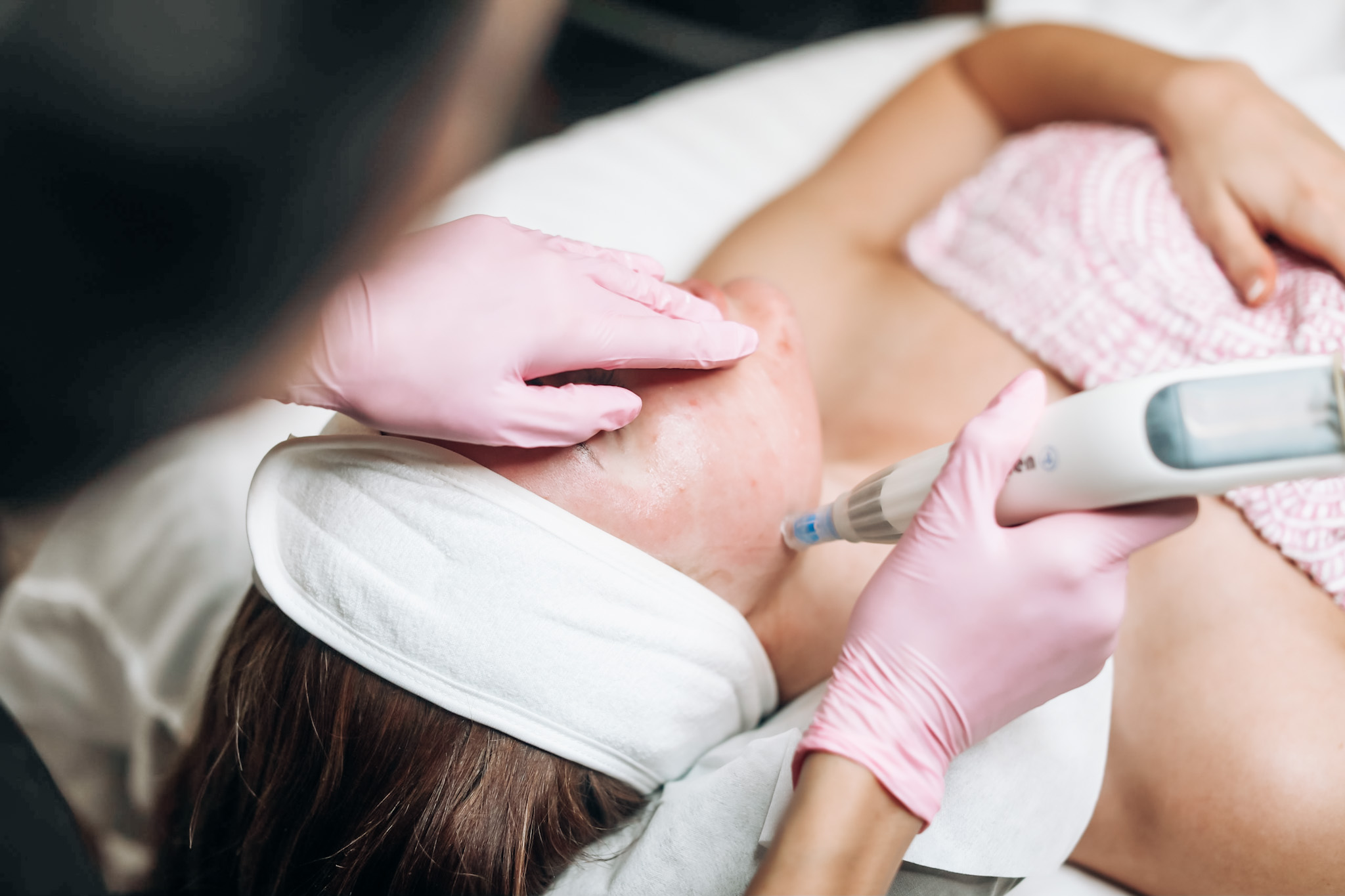
| Lines that stay, fine crepey skin | Tretinoin routine, Dermapen microneedling to the orbital rim, Genius RF with the small under-eye cartridge | Work in one visit; it’s a series |
| Dark circle | Depends on the cause (see below) | A single “dark circle treatment” |
| Hollow under the eye | Referral to a surgeon I trust (we don’t offer filler yet) | Be fixed by skincare |
| Puffy bag or festoon | Mild: peptide eye cream and Genius RF may help; real bags: a surgeon | Go away with creams |
Does Botox work under the eyes?
Yes for crow’s feet, and for a smaller group, yes for the lines that bunch under the eye when you smile. In the study that worked out the dose, improvement was noted in lower eyelid wrinkles by both physicians and patients at both dose groups, but side effects increased with dosage, with eight of eight subjects in the 8-U dose groups reporting bothersome side effects such as lower eyelid edema and incomplete sphincter function. That’s why the under-eye dose is small and the crow’s feet get the rest.
Before I inject under the eye I gently pinch the lower-lid skin and watch how fast it comes back. If it’s slow, the skin has lost its spring and relaxing the muscle underneath can make the area look looser, so you’re not a good candidate and I’ll say so. If you have severe dry eyes I’ll tell you the risk too: Botox around the eye usually does not suppress tear production, but patients should be advised of the small but definite risk of a temporary dry eye. Crow’s feet dosing and pricing live on the Botox page.
Can I use tretinoin under my eyes?
Yes, up to the orbital bone, not on the lid. A 533-person tretinoin trial took its biopsies from exactly this area and found increased epidermal thickness, increased granular layer thickness, decreased melanin content, and stratum corneum compaction, which is thicker, brighter under-eye skin in plain words.
Apply your pea of tretinoin to the face, then bring what’s left on your fingertip along the bony rim under the eye and let it travel the rest of the way on its own. The start-slow rules are the same as on my tretinoin routine page. On top of that I like the Derma Made Multi-Peptide Eye Cream, and if the budget allows, an LED mask, or the Omnilux Mini Eye Brightener made for this area; my honest take on what LED does is on does red light therapy work.
Microneedling or RF microneedling under the eyes?
Dermapen for fine crepey texture, Genius RF when the crease is set and the skin is lax. Under the eye I take the Dermapen to the orbital rim at a lighter setting, and for Genius RF I switch to the small P14 or P16 needle cartridge made for tight areas.
The evidence is young but it points the right way. In an 18-person study of RF microneedling on the eye area, two sessions a month apart gave significant improvement in all four areas assessed, with side effects such as mild pain and redness, temporary and resolved within a week; a 2026 blinded study measured a mean wrinkle reduction of 25.3 ± 40.4% in the infraorbital area, with that wide range being the honest part: some people change a lot, some a little. Plan on a series, not a session.
What about dark circles?
Find the cause first, because there are at least five. The published classification splits them into shadowing, vascular, idiopathic hyperpigmentation, post-inflammatory hyperpigmentation, constitutional, and a 200-patient study found the habits behind them: lack of adequate sleep (40%), frequent cosmetic use (36.50%), frequent eye rubbing (32.50%), with a strong association with stress (71%), atopy (33%) and family history (63%).
Here’s how I treat each. Brown, pigment-type circles (the melasma family) get the tretinoin and brightening routine from my dark spot page. A shadow cast by a hollow is a shape problem, not a color problem; the peptide eye cream alongside tretinoin can soften how it reads, or a small dab of tranexamic acid serum, but nothing in a jar fills it. Thin skin showing the blue of the vessels underneath gets the same answer as crepey skin: build the skin thicker with tretinoin, microneedling and LED. And if you rub your eyes from allergies, treating the allergy does more than any cream.
Should I get under-eye filler or PRF?
Not here, and I’ll tell you why. We don’t offer filler yet, and I don’t do PRP or PRF; in the one randomized, blinded study of PRP with microneedling around the eyes, dermatologists’ assessments revealed no significant differences in skin attributes before and after treatment, even though patients felt better about their skin.
For a true hollow, filler or fat is the right conversation, so I refer you to a reputable surgeon who will tell you honestly whether filler is enough or whether you’d be buying a surgery you don’t need. For puffy bags and festoons, the surgical literature is candid that festoons represent a combination of fluid accumulation and soft tissue laxity and that no nonsurgical treatment currently meets these criteria. If yours are mild, Genius RF and the peptide eye cream may improve them; if they’re real bags, I’ll say “surgeon” and mean it kindly.
How much does under-eye treatment cost in Scottsdale?
The consultation is free, and many under-eye plans start with skincare alone. Botox is priced by the unit and new clients get an introductory price. For the eye area on its own, Dermapen microneedling is currently $150 and Genius RF is currently $300 a session, less per session when you buy a series. Nobody here works on commission.
New clients hold their spot with a $50 deposit that goes toward treatment or products, or is refunded on request; it’s kept only for a no-show.
Looking for under-eye wrinkle treatment in Scottsdale?
We’re at 7054 E Cochise Road B100, Scottsdale, AZ 85253, on the Paradise Valley side of Scottsdale. We see clients from Phoenix, Arcadia, North Scottsdale, Fountain Hills, Cave Creek and Tempe; hours are Monday to Friday 10am to 6pm and weekends 11am to 5pm, by appointment.
Schedule your free consultation or call (480) 405-0100. Not sure where to start? See how a consultation works.
More questions I get about under-eye wrinkles
When you first notice them staying after you stop smiling, which for many people is the late twenties or thirties. Before that, sunscreen, sunglasses and a retinoid are the whole plan; the AAD lists sunglasses with UV protection alongside sunscreen as everyday protection, and warns that lenses that appear dark do not necessarily offer UV protection, so check the label.
They hydrate and soften how fine lines read; they don’t rebuild collagen the way a retinoid or a needle does. I use the peptide eye cream as the partner to tretinoin, not the replacement.
Not here. I keep the Ultra laser off the under-eye and use microneedling, Genius RF with the small cartridge and Botox there instead; the laser does its work on the cheeks and crow’s feet as part of the wrinkle plan.
Written by Beatrice Moorefield, RN, LE, LSO — aesthetic registered nurse, licensed aesthetician, skin health educator, and founder of Skin With Bea Esthetics, Scottsdale.
Disclaimer:
The information provided on this website is for general informational purposes only and is not intended as a substitute for professional medical advice, diagnosis, or treatment. Always seek the advice of a qualified healthcare provider with any questions regarding a medical condition or treatment. The content on this website is not intended to diagnose, treat, cure, or prevent any disease. Use of this information is at your own risk. We are not responsible for any adverse effects or consequences resulting from the use of any information provided.