KeraLase Hair Loss Treatment

A NO-DOWNTIME LASER + RED LIGHT THERAPY TREATMENT FOR FULLER, HEALTHIER HAIR
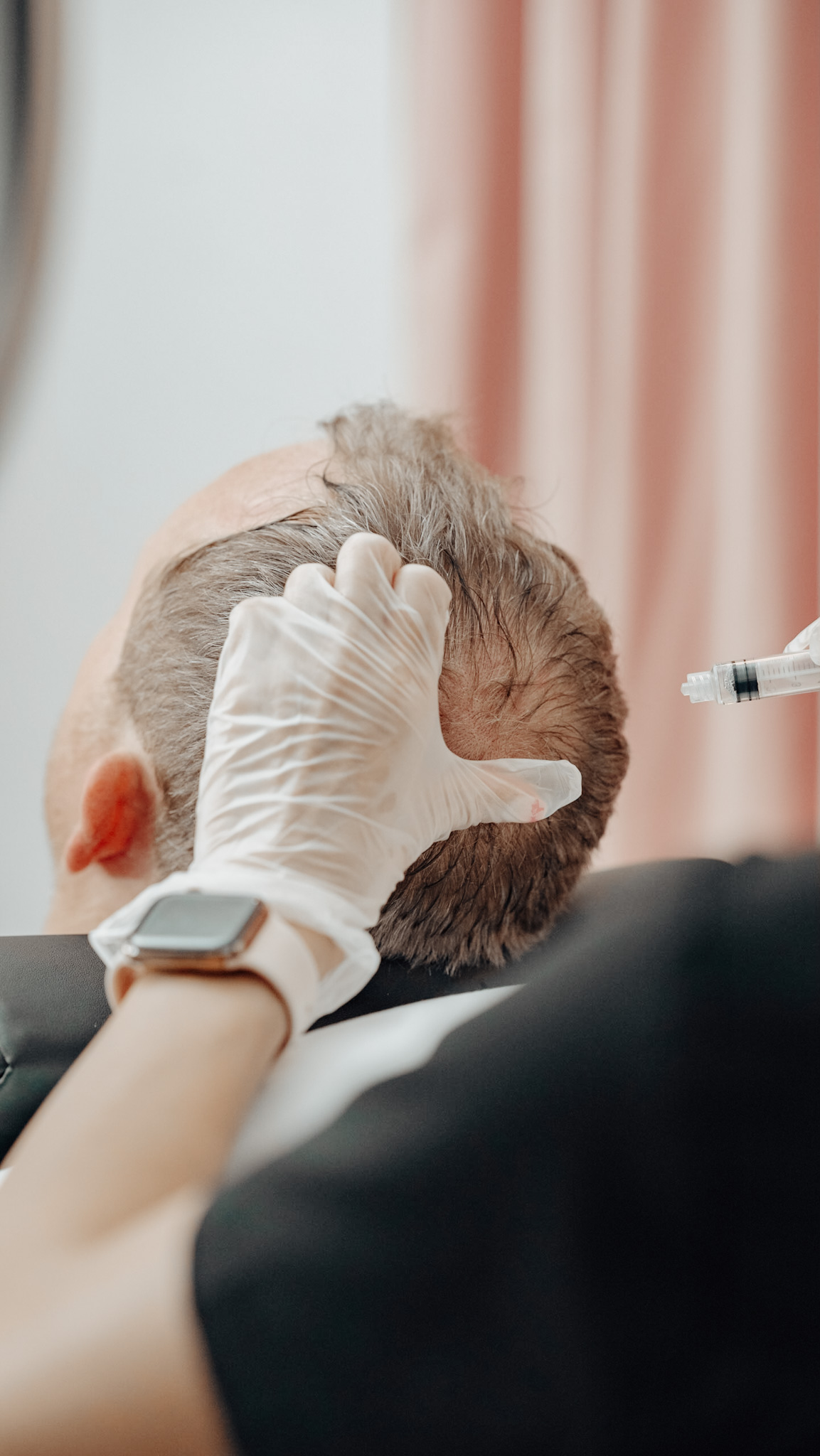
Gloved provider parting a client's hair at the crown and applying serum to the scalp during a KeraLase treatment

Behind the TREATMENT

Stronger roots. Better growth. Zero guesswork.

At Skin With Bea Esthetics in Scottsdale, this treatment goes beyond basic scalp care. Using Lutronic Ultra laser, KeraFactor MD serum, and red light therapy, we awaken dormant follicles, stimulate circulation, and support fuller, healthier hair—with no needles and no downtime.

Whether you’re starting to see thinning or want to get ahead of future hair loss, this protocol is gentle, drug-free and science-backed. Not sure what’s causing it?

Not sure what’s causing it? Read why hair thins and whether it can be reversed.

Why Choose Skin With Bea Esthetics for Your Scalp Treatment?

At Skin With Bea, scalp treatments are thoughtfully designed—not one-size-fits-all. Whether you’re seeing early signs of thinning, shedding from stress or hormones, or simply want to boost hair density, this treatment is tailored to target the root of the issue—literally. No shortcuts. No fluff. Just clinical tools and proven methods for healthier hair, from scalp to strand.

science-backed

Includes KeraLase treatment using Lutronic Ultra laser.

Triple action approach

Laser, targeted serum, and red light therapy for optimal results.

real education

Learn how to support scalp health and hair growth at home, too.

zero downtime

Get back to your day right away.
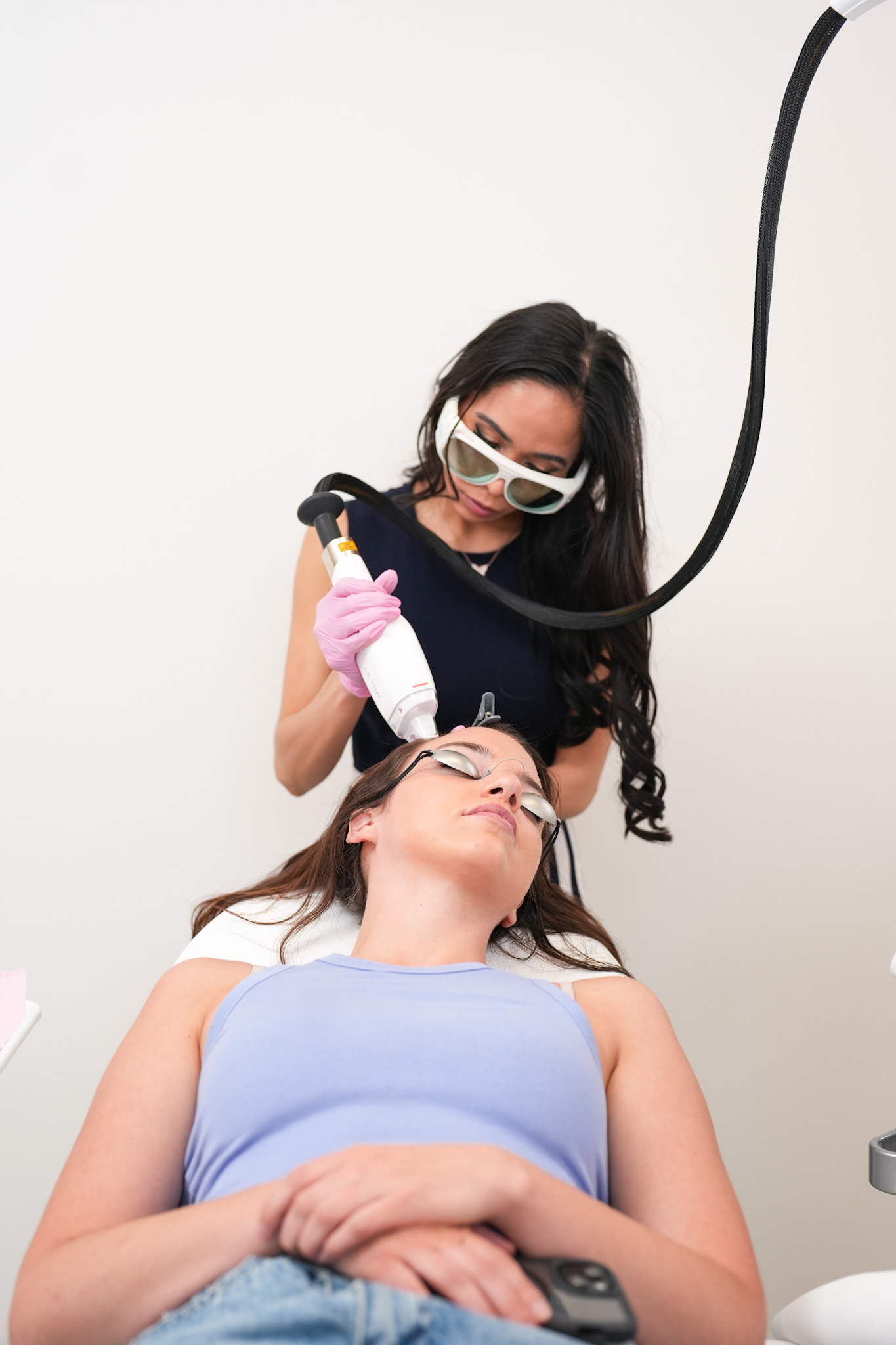
Provider in laser safety glasses treating a reclining client's scalp with the Lutronic Ultra laser during KeraLase

What the Hair Growth Scalp Treatment Includes

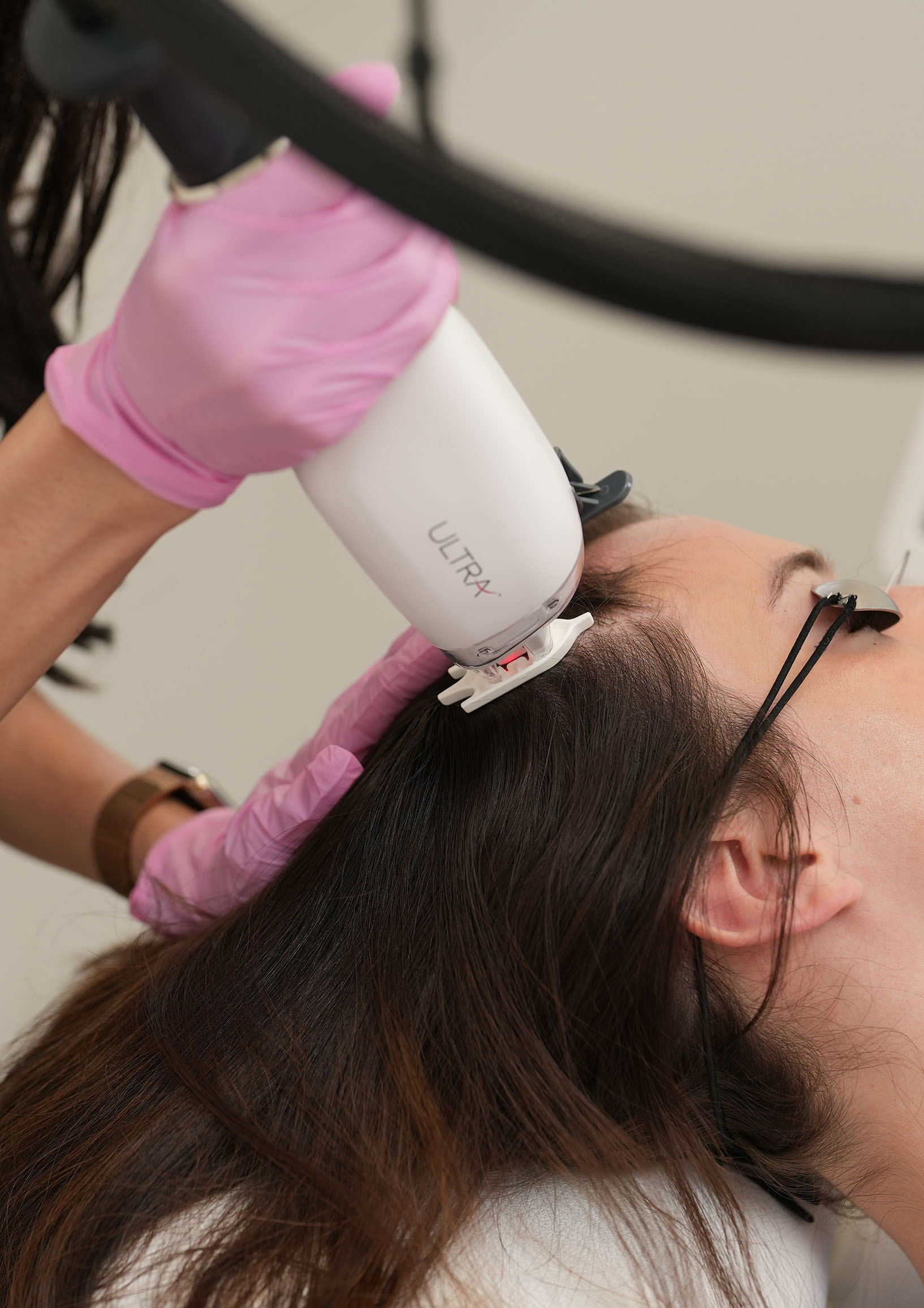
  • Laser-assisted scalp treatment (KeraLase) – Using the Lutronic Ultra laser, this step creates tiny, precise microchannels in the scalp at gentle settings, so no numbing is needed. These channels enhance absorption of growth factors, increase blood flow, and wake up sluggish hair follicles—prepping the scalp for optimal product penetration.
  • Application and massage of KeraFactor MD serum – This medical-grade serum contains high concentrations of synthetic growth factors and peptides specifically designed to target thinning areas. We gently massage it into the scalp to deeply nourish the follicles, reduce inflammation, and improve the health of the scalp environment.
  • Red light therapy using the iRESTORE Professional – Red light (655 nm) from this FDA-cleared laser and LED cap helps stimulate cellular energy (ATP), improve circulation, and support hair growth cycles. This non-invasive step reinforces the treatment and can be continued at home between sessions.
  • Scalp aftercare recommendations and tips – You’ll leave with simple, effective guidance to support your results—including product suggestions, at-home red light options (if desired), and hair-wash timing. We’ll also review lifestyle triggers that could be affecting your hair health (like stress, styling, or supplements) and how to work around them.

Ideal Candidates for This Treatment

Not all hair loss is the same—KeraLase is most effective for:
  • Androgenetic Alopecia – Commonly known as male or female pattern baldness.
  • In women: thinning at the crown while retaining the frontal hairline.
  • In men: recession at the temples and balding on the crown.
  • Telogen Effluvium – Sudden, diffuse hair shedding—usually triggered by stress or health events.
  • Common causes include childbirth, COVID-19, illness, hospitalization, low iron (ferritin <70), low thyroid, medications, or semaglutide use.
  • Typically occurs 3–6 months after the stressor and may resolve in 6–9 months.
  • Best to start treatment once the active shedding phase has passed. At-home products can be used in the meantime to support scalp health.
Close-up of the Lutronic Ultra laser handpiece on a client's scalp along the hair part during a KeraLase treatment

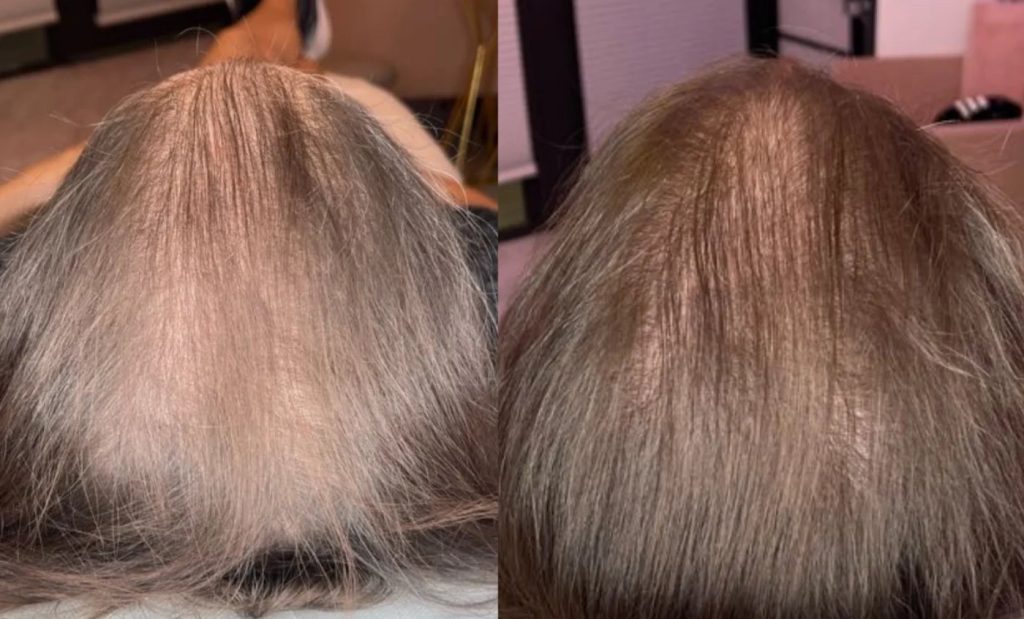
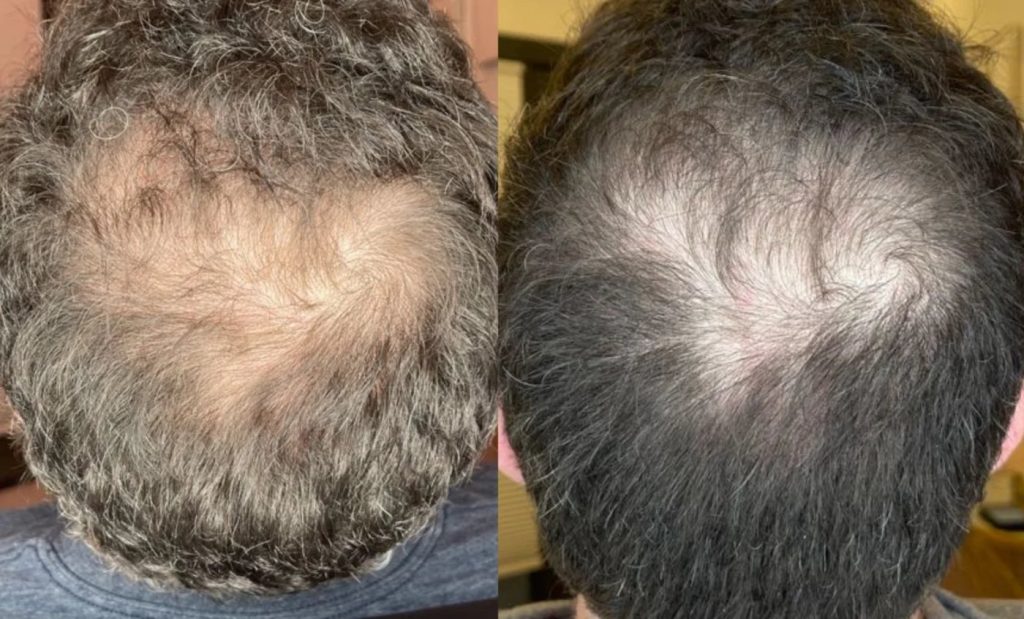
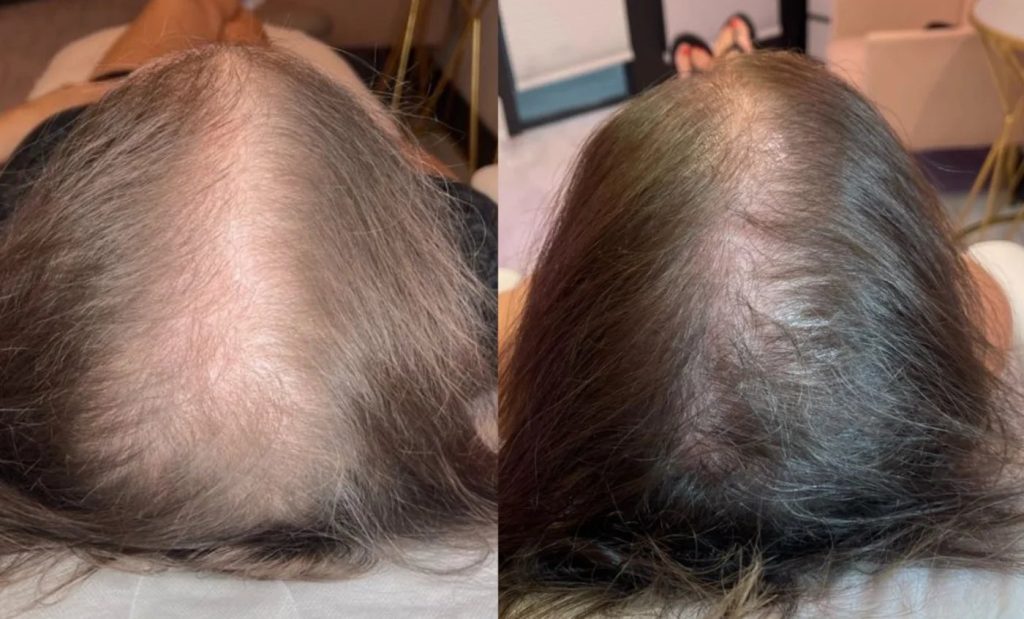
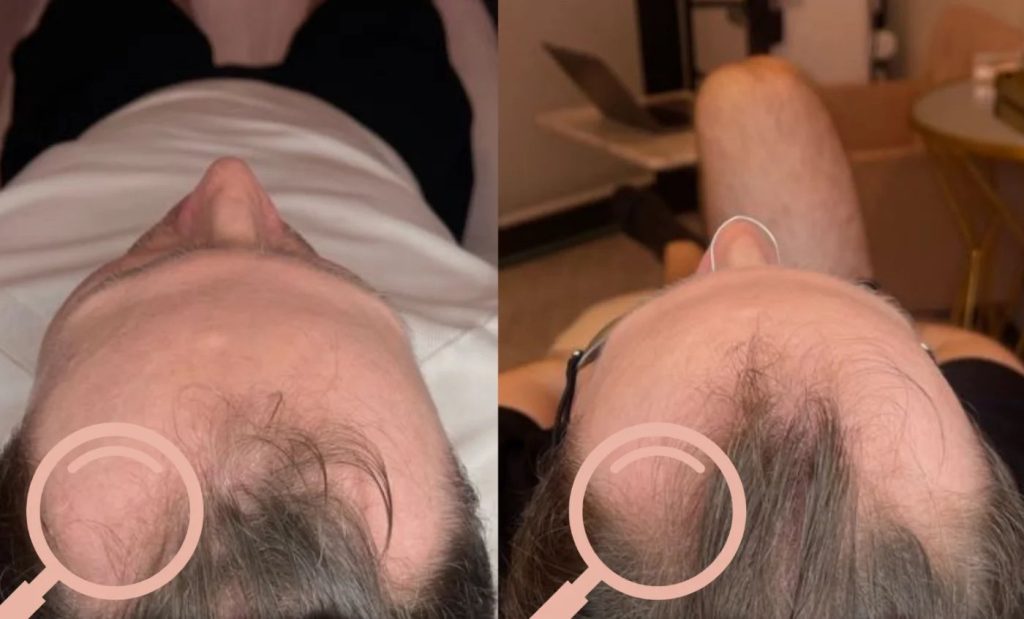
KeraLase Before and After

KeraLase before and after at Skin With Bea in Scottsdale: the top of a woman's head with thinning gray-blonde hair (left) and fuller coverage after a KeraLase series (right)
KeraLase before and after: the crown of a man with dark curly hair, with more scalp showing before (left) and less after a KeraLase series (right)
KeraLase before and after: a woman's center part, wide and see-through before (left) and narrower and fuller after a KeraLase series (right)
KeraLase before and after: a man's temples and frontal hairline seen from above, before (left) and after a KeraLase series (right), with the treated temple areas circled

Learn More About How KeraLase Works

Frequently Asked Questions

Still have questions? Text 480-405-0100 or email hello@skinwithbea.com—or just bring them to your complimentary consultation appointment.

Each session takes approximately 45–60 minutes.

Most clients do a series of 6 treatments, spaced about 4 weeks apart. Maintenance after that depends on your hair loss: some clients only need their at-home care products, some come back a year later and some after 6 months. It depends on each person.

KeraLase is currently $650 per session at our Scottsdale clinic, less per session when you buy a series, and most clients do a series of 6. At your free consultation we price the series and your at-home routine together, so you know the full cost before you start. New clients place a $50 deposit to hold the consultation; it’s credited toward your treatment or refunded on request.

Most clients notice improved scalp health and reduced shedding after a few sessions. Visible hair growth typically begins around 3–6 months, with continued improvement over time. If we don’t see a change by your fourth session, I’ll suggest checking your iron, thyroid and hormone levels with your doctor.

Most clients say no: the laser feels warm and slightly tingly, there are no needles, and the settings are gentle enough that no numbing is needed. Your scalp may look a little pink for a short time afterward, and a few resting hairs can shed in the first day or two. That’s normal.

We don’t start KeraLase if you’re pregnant, nursing, trying to conceive or under 18, or if you have an active scalp infection, psoriasis, eczema, a sunburn or a history of skin cancer on your scalp. Patchy, scarring or autoimmune hair loss (like alopecia areata) and hair pulling should be checked by a dermatologist first. If you’re in a heavy shed right now, we wait until it settles and start you on at-home care in the meantime. If you’re allergic to turmeric or salmon, we’ll do a patch test first.

Come in with clean, dry hair: wash it the night before and skip styling products, dry shampoo and root touch-up sprays. Keep your scalp out of the sun for a week before and after, and wait 48 hours before and after your session to color your hair. Leave the KeraFactor serum in until the next day and keep your scalp dry for 24 hours, then wash as usual.

I chose KeraLase over PRP for our clinic. As I tell clients, PRP is made from your own blood, so it’s only as good as your own health; research reviews describe its results as inconsistent, and the many scalp injections make it a lot more painful. Many of my KeraLase clients tried PRP first, and they’ve told me they saw better results with KeraLase; one said PRP gave her more hairs, but they were still thin. That’s their experience rather than a head-to-head study, and results vary. You can compare KeraLase, PRP and hair transplants side by side in my hair loss treatment guide.

No, but they work well together. KeraLase uses the LaseMD Ultra laser to open tiny channels in your scalp so the KeraFactor serum absorbs deeper, while a red light cap uses low-level light, which has its own evidence for pattern hair loss. That’s why every KeraLase session here ends under the iRESTORE Professional, an FDA-cleared red light cap. It’s also the cap I recommend for home: I use one myself, and iRESTORE offers a 12-month money-back guarantee on caps bought directly from them (a service fee applies).

Yes, and for many clients that’s the plan, because hair loss usually has more than one cause. Depending on how much thinning you have, I may suggest starting at home with OTC minoxidil and five minutes of scalp massage a day, then adding a red light cap or the KeraFactor Scalp Stimulating Shampoo and Conditioner and Scalp Stimulating Solution; KeraLase is the icing on the cake. KeraFactor is drug-free, so you don’t need to stop minoxidil or finasteride, and if a prescription might help, I’ll explain your options so you can ask your dermatologist whether you’re a candidate.

No. KeraLase is a treatment protocol rather than a single product, so it isn’t FDA-approved or cleared for hair growth on its own. The LaseMD Ultra laser is FDA-cleared for dermatological procedures and KeraFactor MD is a drug-free serum, while the iRESTORE Professional red light cap we finish with is FDA-cleared to treat pattern hair loss.

Yes. KeraLase works on the scalp and follicles, not the hair shaft, so colored, permed or relaxed hair is fine. Just wait 48 hours before and after a session to color your hair.

Yes. KeraLase can help both male and female pattern hair thinning, and shedding after stress, illness, childbirth or hormonal changes once the heavy shedding has settled. Completely bald areas usually won’t regrow, because those follicles are no longer active.

KeraLase is performed by Beatrice Moorefield, RN, LE, LSO, an Aesthetic Registered Nurse and Licensed Aesthetician certified on KeraLase, or by a certified aesthetic registered nurse who is also a Certified Laser Technician on her team, following her protocol. Our Medical Director, Abbey Jensen, MSN, FNP-C, provides medical oversight.

READY TO TAKE CONTROL OF HAIR LOSS?

Hair thinning shouldn’t feel like a life sentence. At Skin With Bea Esthetics, you’ll receive expert, personalized scalp treatments that respect your time, your goals, and your hair’s long-term health.

Disclaimer:

The information provided on this website is for general informational purposes only and is not intended as a substitute for professional medical advice, diagnosis, or treatment. Always seek the advice of a qualified healthcare provider with any questions regarding a medical condition or treatment. The content on this website is not intended to diagnose, treat, cure, or prevent any disease. Use of this information is at your own risk. We are not responsible for any adverse effects or consequences resulting from the use of any information provided.

Start Your Skin Journey Today