
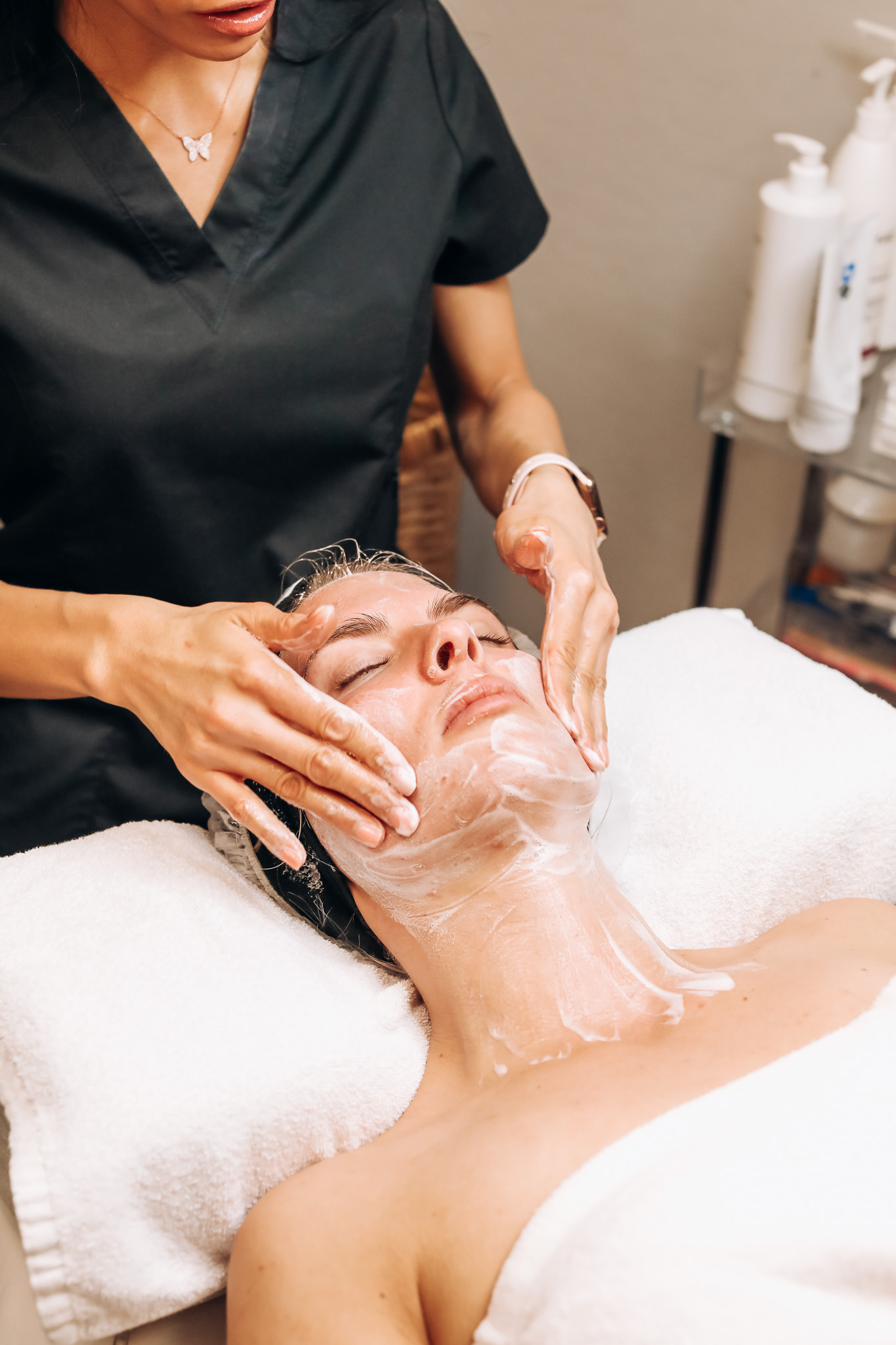
Rosacea Treatment in Scottsdale: Calm It First, Then Treat It
Calm the redness first, then treat it, with a routine your skin can actually handle.
Rosacea treatment in Scottsdale starts with calming your skin, not attacking it. Most of the rosacea clients I see have been using too many products and haven’t worked out what sets off their flares, so we fix those two things first and then add in-clinic treatment. I’m Nurse Bea, an Aesthetic Registered Nurse and Licensed Aesthetician, and this is how I approach rosacea here.
Treatments here are done by me or by a certified aesthetic registered nurse who is also a Certified Laser Technician on my team, following my protocol.
Schedule your free consultation — new clients hold their spot with a $50 deposit, credited to treatment or products, or refunded on request. Call (480) 405-0100 · 7054 E Cochise Road B100, Scottsdale, AZ 85253.











What is rosacea?
Rosacea is a long-term skin condition that causes redness and flushing on the face, and sometimes bumps, visible blood vessels or burning and stinging. Rosacea is a chronic condition, and symptoms can come and go, and the National Rosacea Society estimates it affects more than 16 million Americans.
It most often affects women and those with fair skin, but anyone can get it, and it can start at any adult age: in one survey only 43 percent said their rosacea first appeared between the ages of 30 and 50.
Is it rosacea or acne?
Look for blackheads and lasting redness. Rosacea doesn’t cause blackheads, while acne does, and only rosacea involves persistent redness and flushing.
| Rosacea | Acne | |
|---|---|---|
| Blackheads | No | Yes |
| Lasting redness and flushing | Yes | No |
| Bumps | Can have red bumps and pimples | Pimples and blackheads |
| What helps | Gentle routine, avoiding triggers, sunscreen | Acne routine and treatments (my acne page) |
The difference matters because acne products can make rosacea worse: the National Rosacea Society notes that harsh cleansers, acne medications and even bar soap may make matters worse.
What is acne rosacea, and how is it treated differently from adult acne?
“Acne rosacea” is an old name for the bumpy type of rosacea: red bumps and pimples on top of the redness. The National Rosacea Society notes this type was historically referred to as “acne rosacea”, but that there is no connection between acne and rosacea, and the two need different treatment.
That’s why an adult acne plan can backfire: acne medications may cause rosacea symptoms to get worse. Here’s what changes when the bumps are rosacea:
- Benzoyl peroxide. It’s a staple of many acne routines, but the AAD says regular benzoyl peroxide can irritate sensitive skin, making it an unacceptable treatment for rosacea. The exception is a prescription encapsulated 5% cream made for rosacea, which goes through a dermatologist.
- Exfoliating acids and scrubs. Acne skin often does well with them; rosacea skin doesn’t, because glycolic acid and lactic acid are on the AAD’s list to avoid. I use only the gentlest peel.
- The creams that work. For rosacea bumps, the AAD lists azelaic acid, ivermectin and metronidazole among the medications for acne-like breakouts. We carry an over-the-counter azelaic acid; the prescription creams go through a dermatologist.
- Triggers. With rosacea, avoiding sun and heat is half the plan, so the sunscreen and trigger steps below matter as much as any product.
- The pace. My Acne Clearing Program for adult acne brings you in every two to four weeks; for rosacea, I calm the skin first and keep in-clinic treatment gentle.
What triggers rosacea flare-ups?
Sun is the top trigger, followed by stress and hot weather. In a National Rosacea Society survey of 1,066 people with rosacea, sun exposure was named by 81%, emotional stress by 79% and hot weather by 75%, with alcohol, hot baths, spicy foods and hot drinks further down the list.
That matches what I see in Scottsdale: sun sets off my clients’ rosacea more than anything else. The other big mistake is ignoring triggers altogether. Keeping a simple note of what you did on a bad-flare day (a hike in the sun, a hot shower, a glass of wine) is often how you find yours.
What’s the best skincare routine for rosacea?
Fewer products, all of them gentle: cleanser, moisturizer and sunscreen, then one active at a time. The AAD advises a mild, rosacea-friendly cleanser, moisturizing after cleansing, and testing products before using them on your face.
Too many products is the first thing I change. A crowded routine keeps the skin irritated, so we strip it back to:
- A gentle cleanser. Rinse with lukewarm water; hot or cold water may cause flushing or irritation.
- A barrier moisturizer. NIAMS advises cleansers made for sensitive skin, and moisturizing regularly.
- A mineral sunscreen every morning (more below).
- Azelaic acid, once the basics are settled.
- A gentle start with tretinoin 0.025% cream, only if it suits your skin (more below).
What not to put on rosacea skin: the AAD lists alcohol, camphor, fragrance, glycolic acid, lactic acid, menthol, sodium lauryl sulfate and urea, and witch hazel bothers many people too. NIAMS also says to avoid exfoliants and products that contain alcohol.
Which sunscreen is best for rosacea?
A broad-spectrum SPF 30 or higher you’ll wear every day, and usually a mineral one. The AAD recommends broad-spectrum protection, SPF 30 or higher, and water resistance, and the National Rosacea Society suggests mineral-based products that contain zinc oxide or titanium dioxide.
Because sun is the trigger I see most here, this is the step I won’t let anyone skip, even on cloudy days and short drives.
Does azelaic acid help rosacea?
Yes, it is one of the best-studied options for rosacea bumps. Prescription azelaic acid 15% gel is FDA-approved for the inflammatory papules and pustules of mild to moderate rosacea, and the AAD says it may reduce long-lasting color as well.
We carry the over-the-counter Derma Made Azelaic Acid Cream. The prescription strength goes through a dermatologist.
Can tretinoin help rosacea?
It can, if it’s introduced slowly and suits your skin. In my experience, tretinoin used properly for the person’s own skin helps improve rosacea, and a small study found tretinoin 0.025% cream improved bumps and redness over 16 weeks.
The evidence is still mixed, though: a 2025 review called the data for topical retinoids in rosacea less definitive and more contradictory, and a dermatologist writing for the AAD says that with a lot of redness or inflammation, they should avoid retinoids. That’s why it comes after the skin is calm, at the lowest strength. If it’s right for you, our Medical Director can provide it here.
Is a facial good for rosacea?
A gentle one can be, as long as it avoids the usual irritants. My custom facial for rosacea skin uses the gentlest peel, a soothing, hydrating mask and LED light, with no fragrance and no scrubs.
LED feels calming on rosacea skin in my experience, but the research is still small and early, such as a retrospective study of 90 people where LED was added to medication. Read more about our custom facial.
Does laser help rosacea?
The right laser can, but it depends on what you’re treating. For visible blood vessels and lasting redness, vascular lasers and IPL are the tools: the AAD says laser treatments are effective at reducing rosacea, red birthmarks, broken blood vessels, and I refer clients out for IPL or V-beam.
Our laser, UltraGlo, is the gentle low-density setting of the Lutronic Ultra. It isn’t a vascular laser and it doesn’t treat visible blood vessels; I use it once the skin is calm, for the overall tone and texture, alongside the home routine. More on laser skin resurfacing.
When should I see a dermatologist for rosacea?
When home care and gentle treatments aren’t enough, or you need prescription medication. Dermatologists can offer creams and pills such as metronidazole, ivermectin, azelaic acid and oral doxycycline, and brimonidine or oxymetazoline, which can fade the persistent color for up to 12 hours.
Rosacea is also easy to miss in darker skin: NIAMS notes it may be under-recognized in darker skinned people because darker skin can mask facial redness. If burning, stinging or bumps keep coming back, a dermatologist visit is worth it, and I’m happy to work alongside one.
Does rosacea go away?
Not for good, but it can be kept under control. NIAMS says treatment can keep it under control, and symptoms often come and go.
That’s why “calm it, then treat it” is a long game: a gentle routine, daily sunscreen and knowing your triggers do most of the work, and treatments help on top.
How much does rosacea treatment cost in Scottsdale?
The consultation is free, and many plans start with home care alone. The custom facial is currently $179, UltraGlo is currently $395 a session, less per session when you buy a series, and nobody here works on commission.
New clients hold their spot with a $50 deposit that goes toward treatment or products, or is refunded on request; it’s kept only for a no-show.
Looking for rosacea treatment in Scottsdale?
We’re at 7054 E Cochise Road B100, Scottsdale, AZ 85253, on the Paradise Valley side of Scottsdale. We see clients from Phoenix, Arcadia, North Scottsdale, Fountain Hills, Cave Creek and Tempe; hours are Monday to Friday 10am to 6pm and weekends 11am to 5pm, by appointment.
Schedule your free consultation or call (480) 405-0100. Not sure where to start? See how a consultation works.
More questions I get about rosacea
Get out of the sun and heat, rinse with lukewarm water, and go back to just cleanser, moisturizer and sunscreen for a few days. If you’ve been exfoliating, the AAD’s advice is simple: if you exfoliate your skin, stop.
For visible blood vessels, the AAD reports a 50 to 75% reduction after 1 to 3 treatments, spaced 3 to 4 weeks apart. Treated vessels don’t come back, but new ones can form, so touch-ups are common; I refer out for these.
For many people, yes: sun and hot weather were two of the three most common triggers in the National Rosacea Society survey. In my experience sun is the big one here, so daily mineral sunscreen and a hat matter year-round.
Written by Beatrice Moorefield, RN, LE, LSO — aesthetic registered nurse, licensed aesthetician, skin health educator, and founder of Skin With Bea Esthetics, Scottsdale.
Disclaimer:
The information provided on this website is for general informational purposes only and is not intended as a substitute for professional medical advice, diagnosis, or treatment. Always seek the advice of a qualified healthcare provider with any questions regarding a medical condition or treatment. The content on this website is not intended to diagnose, treat, cure, or prevent any disease. Use of this information is at your own risk. We are not responsible for any adverse effects or consequences resulting from the use of any information provided.