
How to Prevent Stretch Marks During Pregnancy: What Helps and What Doesn’t
No cream is proven to stop them. Here’s what may help, what doesn’t, and the simple routine I teach.
Wondering how to prevent stretch marks during pregnancy? The honest answer is that nothing is proven to stop them, but a few things may help, and some popular ones don’t. I’m Nurse Bea, an Aesthetic Registered Nurse and Licensed Aesthetician in Scottsdale, and this is what I teach my pregnant clients.
Can you prevent stretch marks during pregnancy?
Not for certain. Around 8 out of 10 pregnant women get stretch marks, and ACOG says there are no proven remedies that keep stretch marks from appearing.
Whether you get them depends on your skin type, as some people’s skin is more elastic. Here’s what the research says about the usual advice:
| What you’ve heard | What the research says |
|---|---|
| Hyaluronic acid or centella | May help prevent stretch marks |
| Cocoa butter, almond oil, olive oil or vitamin E | Didn’t prevent stretch marks in studies |
| Coconut oil | Doesn’t effectively prevent stretch marks |
| Creams sold for stretch marks | No high-quality evidence that any of those tested prevent them |
| Drinking more water | Good for you, but not a proven way to keep stretch marks away |
| Gaining more weight than average | Makes stretch marks more likely |
When do stretch marks appear in pregnancy?
Usually later in pregnancy, as your bump starts to grow. They’re common in pregnant women, especially during the last trimester, and in one study of 213 first-time moms, they appeared most often between 24 and 35 weeks.
The first sign may be itchiness where the skin is becoming thinner. New marks tend to be red, purple, pink, reddish-brown or dark brown, depending on your skin color, and they show up most on the belly and breasts, and for some women the buttocks, thighs and hips.
Are stretch marks genetic?
Partly. The AAD says you may have a higher risk if people in your family get stretch marks, and Mayo Clinic lists a personal or family history of stretch marks as a risk factor.
In the same study of first-time moms, younger age, weight gain during pregnancy and a family history all raised the odds. You can’t change your genes. What you can do is start your routine early: I have every client start as soon as she’s pregnant.
Do stretch mark creams work?
Not reliably. A Cochrane review found no high-quality evidence to support any of the creams and oils tested, and Mayo Clinic says the idea that rubbing on creams, oils or lotions prevents stretch marks is not supported by strong evidence.
The most promising ingredients are simple ones: the AAD says products containing centella or hyaluronic acid may help prevent stretch marks. So you don’t need a product sold as a “stretch mark cream.” Spending a lot on those is the most common mistake I see.
What’s the best stretch mark cream for pregnancy?
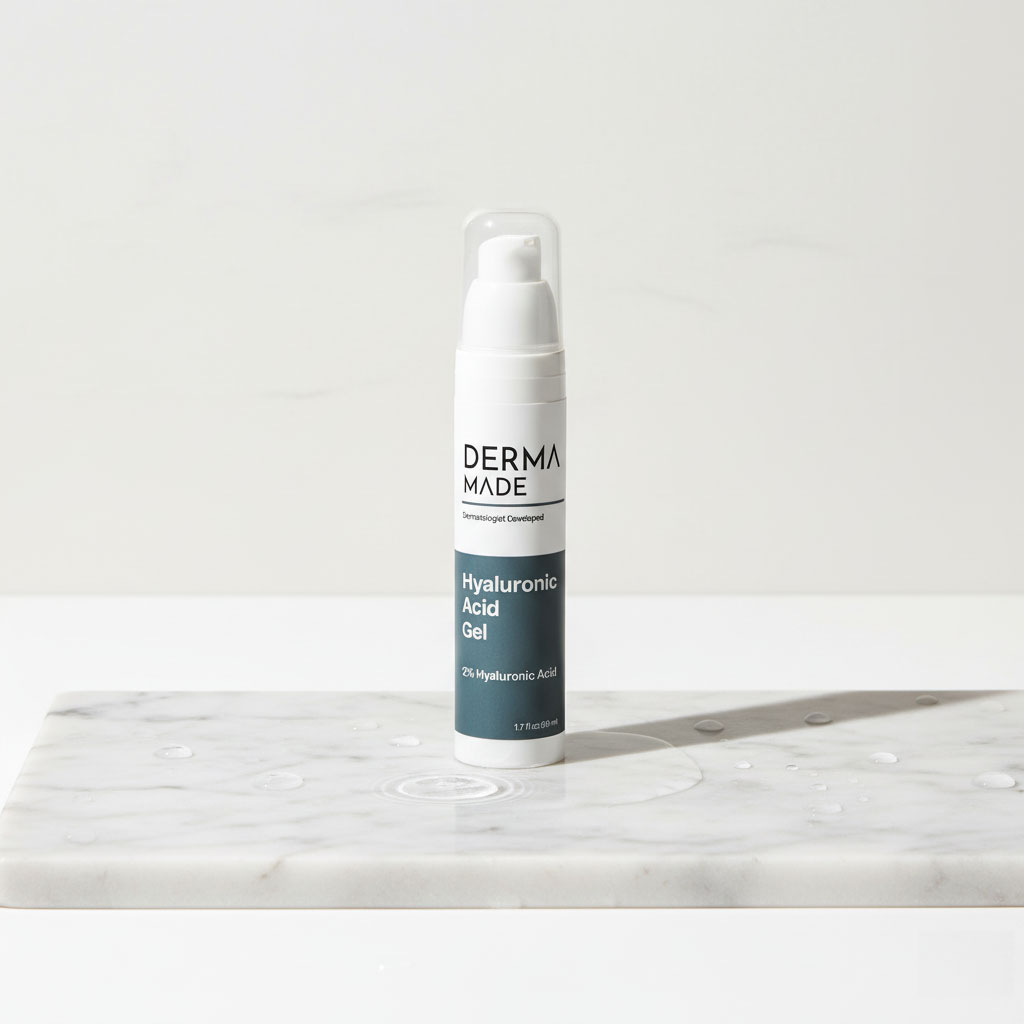
There isn’t a proven one, so I keep it simple: a hyaluronic acid gel plus a moisturizer, several times a day, starting as soon as you know you’re pregnant. The ones I recommend, and carry in our shop, are Derma Made’s Hyaluronic Acid Gel with their Ceramide Barrier Cream or Niacinamide Lotion on top.
Here’s the routine I teach:
- Start early. Begin as soon as you’re pregnant, before your belly starts to grow.
- Layer it. Apply the hyaluronic acid gel to slightly damp skin, then the moisturizer to seal it in.
- Repeat it. Do it several times a day, not just once.
- Cover your worry spots. Belly, breasts, hips and thighs, or buttocks: one area or all of them.
No routine can promise you won’t get stretch marks. This one simply keeps the most promising ingredient on your skin, often.
Which oil is best for stretch marks during pregnancy?
None has been shown to prevent them. In studies, neither almond oil, cocoa butter, olive oil, nor vitamin E prevented stretch marks, and Cleveland Clinic says cocoa butter, coconut oil, olive oil and almond oil don’t effectively treat or prevent stretch marks.
If you love a belly oil, use it because it feels good, not as protection, and skip blends with essential oils (more on that below).
Is retinol safe during pregnancy?
No. The AAD lists over-the-counter skin care containing retinol among the ingredients to avoid during pregnancy, and the NHS says you should not use retinoid creams if you’re pregnant as they may harm your baby.
While you’re pregnant, I ask clients to stop these:
- Retinol and retinoids, including prescription tretinoin and our Retinol + Bakuchiol Serum.
- Hydroquinone, the dark-spot cream. It’s on the same AAD list of ingredients to avoid during pregnancy.
- Fragrance and essential oils. Fragrance is one of the most common causes of contact dermatitis, and the AAD lists essential oils like rosemary, basil, jasmine and sage among the ingredients to limit during pregnancy.
- Strong acid products, like our AHA + BHA Peel Pads. That’s my extra caution: the AAD only asks you to limit salicylic acid stronger than 2%.
Check with your OB-GYN before you add any new product.
Can you prevent stretch marks naturally?
Not reliably, but your weight gain matters: the NHS says you’re more likely to get stretch marks if your weight gain is more than average in pregnancy. The CDC says to work with your health care provider on your weight gain goals.
Drinking water, eating well and staying active are good for you and your baby, but none of them is a proven way to keep stretch marks away. ACOG puts it plainly: there are no proven remedies.
Already have stretch marks?
Treatment waits until after your baby. We don’t treat stretch marks during pregnancy, and the AAD says if you’re pregnant or breastfeeding, check with your doctor before treating stretch marks.
Once it’s safe, don’t wait too long: early stretch marks respond better to treatment than older ones. See my guide to stretch mark treatment in Scottsdale for what we do after pregnancy.
Schedule your free consultation — new clients hold their spot with a $50 deposit, credited to treatment or products, or refunded on request. Call (480) 405-0100 · 7054 E Cochise Road B100, Scottsdale, AZ 85253.











More questions I get about preventing stretch marks
A 2022 review of skin care in pregnancy says the use of hyaluronic acid during pregnancy is considered safe and can be used liberally. Still, check with your OB-GYN before you start anything new.
Some itching is normal: itching in pregnancy is common, and ACOG says keeping your belly well moisturized as it grows may reduce itching. Call your OB-GYN or midwife right away if your skin is very itchy, your palms or soles itch, or the itching is worse at night, because these could be signs of intrahepatic cholestasis of pregnancy (ICP) that needs urgent treatment. Show them any rash too, like itchy, hive-like bumps that form in the stretch marks on your belly (a condition called PUPPP).
You might: Mayo Clinic lists a personal history of stretch marks among the things that make them more likely. Start the routine as soon as you know you’re pregnant again.
Written by Beatrice Moorefield, RN, LE, LSO — aesthetic registered nurse, licensed aesthetician, skin health educator, and founder of Skin With Bea Esthetics, Scottsdale.
Disclaimer:
The information provided on this website is for general informational purposes only and is not intended as a substitute for professional medical advice, diagnosis, or treatment. Always seek the advice of a qualified healthcare provider with any questions regarding a medical condition or treatment. The content on this website is not intended to diagnose, treat, cure, or prevent any disease. Use of this information is at your own risk. We are not responsible for any adverse effects or consequences resulting from the use of any information provided.