
GLP-1 Hair Loss Treatment in Scottsdale: Why It Happens and What Helps
A shed, not damage: why it happens, the blood tests to ask for, and the plan that works while you stay on your medication.
If you’re on Ozempic, Wegovy, Mounjaro or Zepbound and your hair is coming out by the handful, you’re not imagining it. GLP-1 hair loss treatment in Scottsdale starts with understanding why it’s happening, because it’s usually more than one thing, then fixing those things in order. I’m Nurse Bea, an Aesthetic Registered Nurse and Licensed Aesthetician, and this is how I walk clients through it.
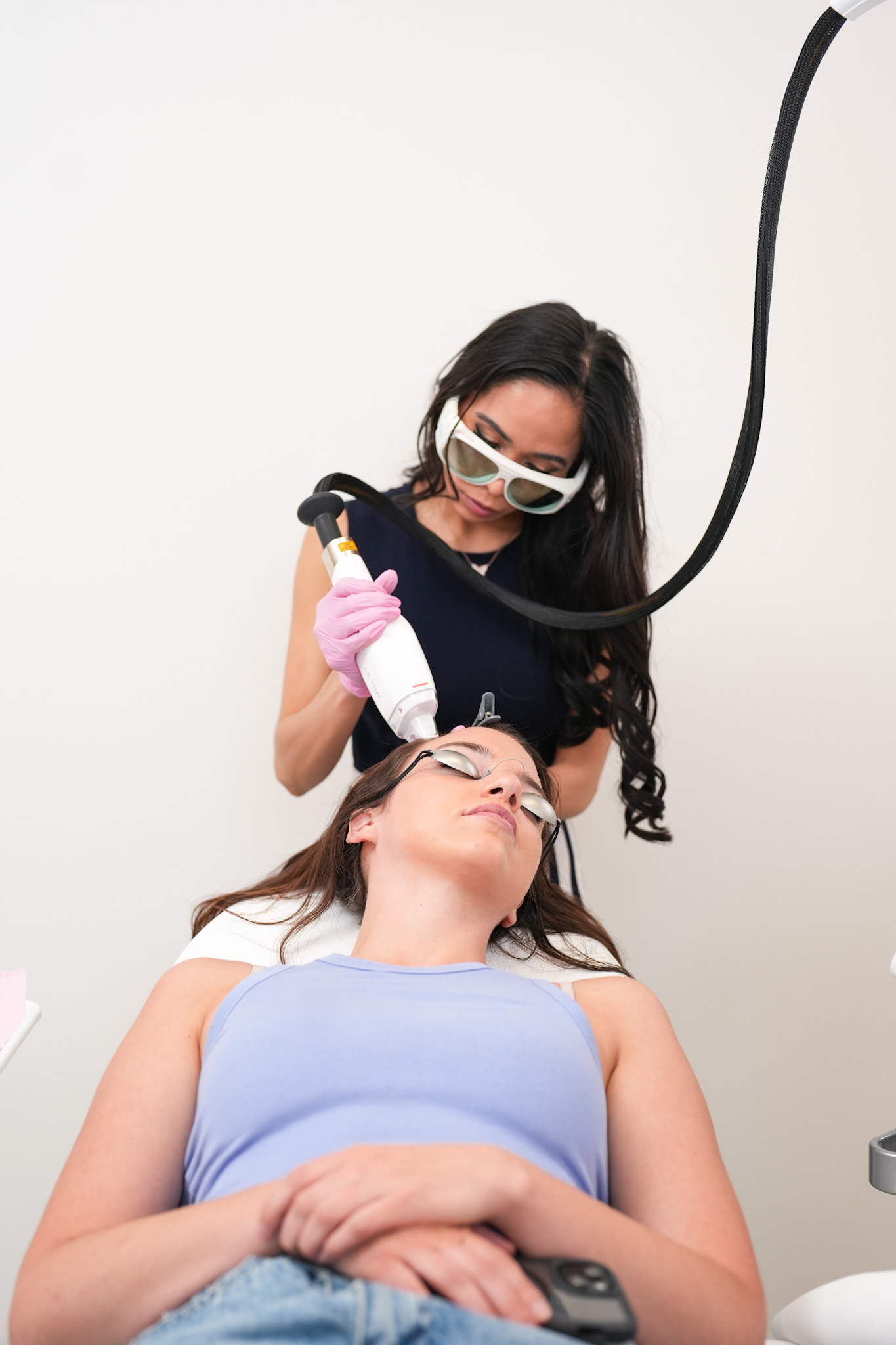
KeraLase in our clinic is done by me or by a certified aesthetic registered nurse who is also a Certified Laser Technician on my team, following my protocol, with medical oversight from our Medical Director, Abbey Jensen, MSN, FNP-C. We never tell anyone to stop or change a medication.
Schedule your free consultation — new clients hold their spot with a $50 deposit, credited to treatment or products, or refunded on request. Call (480) 405-0100 · 7054 E Cochise Road B100, Scottsdale, AZ 85253.











Does GLP-1 medication cause hair loss?
Yes, it can: hair loss is listed in the FDA label for Wegovy, at 3% of people versus 1% on placebo, and in the Zepbound label at 4 to 5% versus 1%. Most of it is a shed, not damage: dermatologists believe this hair loss is caused by the sudden weight loss, a temporary shedding called telogen effluvium.
A 2026 study of nearly 550,000 GLP-1 users confirmed the risk is real, and the same sources agree on the other half: any hair you lose after starting a weight-loss medication typically grows back.
Why does it happen?
Usually several things at once: fast weight loss, eating less, and sometimes hormones. Rapid weight loss can trigger telogen effluvium, eating less means your body can miss the protein, vitamins and nutrients hair needs, and thyroid or androgen changes can add to it (the blood tests below).
When someone comes to me shedding, my first job is to explain the possible reasons, because the plan depends on them. With a GLP-1 the list is longer than people expect: how fast the weight came off, what you’re eating now, iron, thyroid, hormones. Then we start the home plan while we find out which apply to you.
Ozempic, Wegovy, Mounjaro or Zepbound: does it matter which one?
Less than you’d think. The two weight-management labels report hair loss at similar rates, the two diabetes labels don’t list it in their trial tables, and the plan is the same whichever one you take.
| Medication | Hair loss in the trials, per the FDA label |
|---|---|
| Wegovy (semaglutide, weight management) | 3% versus 1% on placebo |
| Zepbound (tirzepatide, weight management) | 4 to 5% versus 1%; 7.1% of women versus 0.5% of men |
| Ozempic (semaglutide, type 2 diabetes) | Not in the trial table; reported after approval |
| Mounjaro (tirzepatide, type 2 diabetes) | Not in the trial table; reported after approval |
When does it start, and how long does it last?
Shedding usually shows up two to three months after the trigger, and the acute form lasts three to six months. The AAD lists losing 20 pounds or more as a trigger and says fullness tends to return within six to nine months.
The lag is why it feels random: the hairs falling out in month four stopped growing in month one or two.
Will my hair grow back?
For most people, yes, because a shed doesn’t destroy the follicle. UVA Health’s obesity-medicine team says most people’s hair looks noticeably fuller again within about six months to a year once the weight loss settles and nutrition improves.
The exception is pattern thinning: the 2026 cohort found higher odds of both telogen effluvium and androgenetic alopecia, so a shed can uncover thinning that was already starting, and that needs its own plan.
How do I stop GLP-1 hair loss?
Fix what’s driving it, in this order: food first, then blood tests, then the scalp routine below. Hair is built from protein, and a 2025 advisory from four obesity and nutrition societies notes that higher protein targets of 1.2 to 1.6 g per kg a day have been proposed during active weight loss and lists excessive hair loss among the signs of a nutrient shortfall.
My advice is whole foods you’d recognize on a plate, not the “GLP-1 friendly” packaged products now marketed to people on these medications. Then see a dermatologist and ask for a hair-loss blood panel; it’s the step most people skip, and the one that changes the plan:
- Ferritin (iron stores). Hair-follicle cells are extremely sensitive to even a minor drop in iron; dermatology reviews suggest ferritin above roughly 40 to 70 to reverse a shed, stricter than a standard “normal.”
- TSH (thyroid). A thyroid problem can cause thinning hair, and treating it can reverse the loss, whether the thyroid is underactive or overactive.
- Testosterone and DHT. High DHT shrinks follicles and shortens the growth cycle, which is pattern hair loss; in women, high testosterone can thin the temples and crown.
- SHBG. When it’s low, more of your testosterone is free and active, and in women pattern hair loss worsens as SHBG falls.
- DHEA-S (women). High levels can mean hair loss at the top of the head and point to PCOS, where scalp thinning is a listed symptom.
- Prolactin. Part of the work-up: hair loss with high prolactin is mainly linked to androgens.
- Vitamin D and zinc. It’s reasonable to check vitamin D and correct a deficiency in shedding, and zinc deficiency can cause thinning hair.
What’s the home plan while I’m still on the medication?
Protect what you have and support the regrowth, without adding anything that sheds. In order: gentle hair care, five minutes of scalp massage a day, a red light cap, and a growth-support serum.
- Gentle hair care. No fragranced or stripping shampoo and conditioner, no tight ponytails, low heat.
- Five minutes of scalp massage a day. In one small study of nine men, four minutes a day for 24 weeks made the hairs thicker, though not more numerous: a helper, not a fix.
- A red light cap, such as iRESTORE. Home caps are FDA-cleared for pattern hair loss, but a 2024 review found limited efficacy for telogen effluvium itself, so I suggest one to support the regrowth, not to stop the shed.
- A growth-support serum. KeraFactor is drug-free and can be used alongside minoxidil later; it’s what we use in the clinic. On a budget, the peptide serums from The Ordinary (paid link) or Minimalist (paid link) are fine; their evidence is early and mostly from the ingredient makers, so treat them as support, not treatment. As an Amazon Associate I earn from qualifying purchases.
Do vitamins or supplements help GLP-1 hair loss?
Only when they fix a shortfall, which is why the blood tests come first. The AAD says to take biotin, iron or zinc only when a blood test shows a deficiency, because taking them with normal levels can be harmful.
One warning on biotin: the FDA says biotin above the recommended daily intake can cause falsely high or falsely low lab results, so stop it before your blood draw and tell the lab you’ve been taking it.
Should I use minoxidil for GLP-1 hair loss?
Not while you’re still shedding. Minoxidil causes its own start-up shed, a temporary increase in hair loss in the first two to eight weeks, so I wait until the shedding has clearly settled before adding it.
Once it has, over-the-counter minoxidil is an option, especially if pattern thinning has shown up: use it for six to 12 months before judging the result, and know that hair loss starts again within a few months if you stop. Prescription options go through a dermatologist, not our clinic.
Is it different for women?
The shed is the same, but women report it more and more often have something underneath it. In the Zepbound trials, 7.1% of women reported hair loss versus 0.5% of men, and female pattern hair loss most often begins in midlife and is more common after menopause, so a GLP-1 shed in your 40s or 50s can uncover it.
That’s why the panel above includes the androgens and DHEA-S. If you’re pregnant, nursing or trying to conceive, KeraLase isn’t for you; see my postpartum hair loss guide instead.
When does KeraLase make sense?
Case by case, at the consultation, once the heavy shedding has settled and your labs show nothing that needs fixing first. KeraLase stimulates follicles that are resting or dormant, but it doesn’t create new ones, so it’s for the regrowth phase, when you’d rather not wait for your hair to fill back in on its own.
Each session pairs the LaseMD Ultra laser with KeraFactor serum and red light under the iRESTORE Professional, usually six sessions about four weeks apart; see KeraLase before-and-after photos and the full details on my KeraLase page.
How much does GLP-1 hair loss treatment cost in Scottsdale?
The consultation is free (scalp consultations usually take about 30 minutes), and the home plan costs only the products you choose. KeraLase is currently $650 a session, less per session when you buy a series, and nobody here works on commission.
New clients hold their spot with a $50 deposit that goes toward treatment or products, or is refunded on request; it’s kept only for a no-show.
Looking for GLP-1 hair loss treatment in Scottsdale?
We’re at 7054 E Cochise Road B100, Scottsdale, AZ 85253, on the Paradise Valley side of Scottsdale. We see clients from Phoenix, Arcadia, North Scottsdale, Fountain Hills, Cave Creek and Tempe; hours are Monday to Friday 10am to 6pm and weekends 11am to 5pm, by appointment.
Thinning that started before the medication? See my guide to hair loss treatment in Scottsdale.
Schedule your free consultation or call (480) 405-0100. Not sure where to start? See how a consultation works.
More questions I get about GLP-1 hair loss
That’s between you and your prescriber, and it’s rarely necessary: the shed is tied to the weight loss, and hair typically grows back once your weight and nutrition settle. Pace and dose are the right things to raise with them, not the hair alone.
Not entirely, but you can lower the odds. The AAD says people prone to hair loss should lose weight slowly on these drugs and take a daily multivitamin, and getting your protein and iron right from the first week helps most.
Mostly the weight loss: weight loss is a known cause of hair shedding, and the plan is the same either way. A direct effect on the follicle is being studied, so far only in men.
In the trials, 3 to 5%, but a Cleveland Clinic endocrinologist estimates that 25 to 33% of people on these medications for weight loss notice some hair loss. Most of it is mild and temporary.
First as short, fine “baby hairs” along the hairline and part, months before it adds up to volume; UVA Health says most people look noticeably fuller again within about six months to a year.
Written by Beatrice Moorefield, RN, LE, LSO — aesthetic registered nurse, licensed aesthetician, skin health educator, and founder of Skin With Bea Esthetics, Scottsdale.
Disclaimer:
The information provided on this website is for general informational purposes only and is not intended as a substitute for professional medical advice, diagnosis, or treatment. Always seek the advice of a qualified healthcare provider with any questions regarding a medical condition or treatment. The content on this website is not intended to diagnose, treat, cure, or prevent any disease. Use of this information is at your own risk. We are not responsible for any adverse effects or consequences resulting from the use of any information provided.