
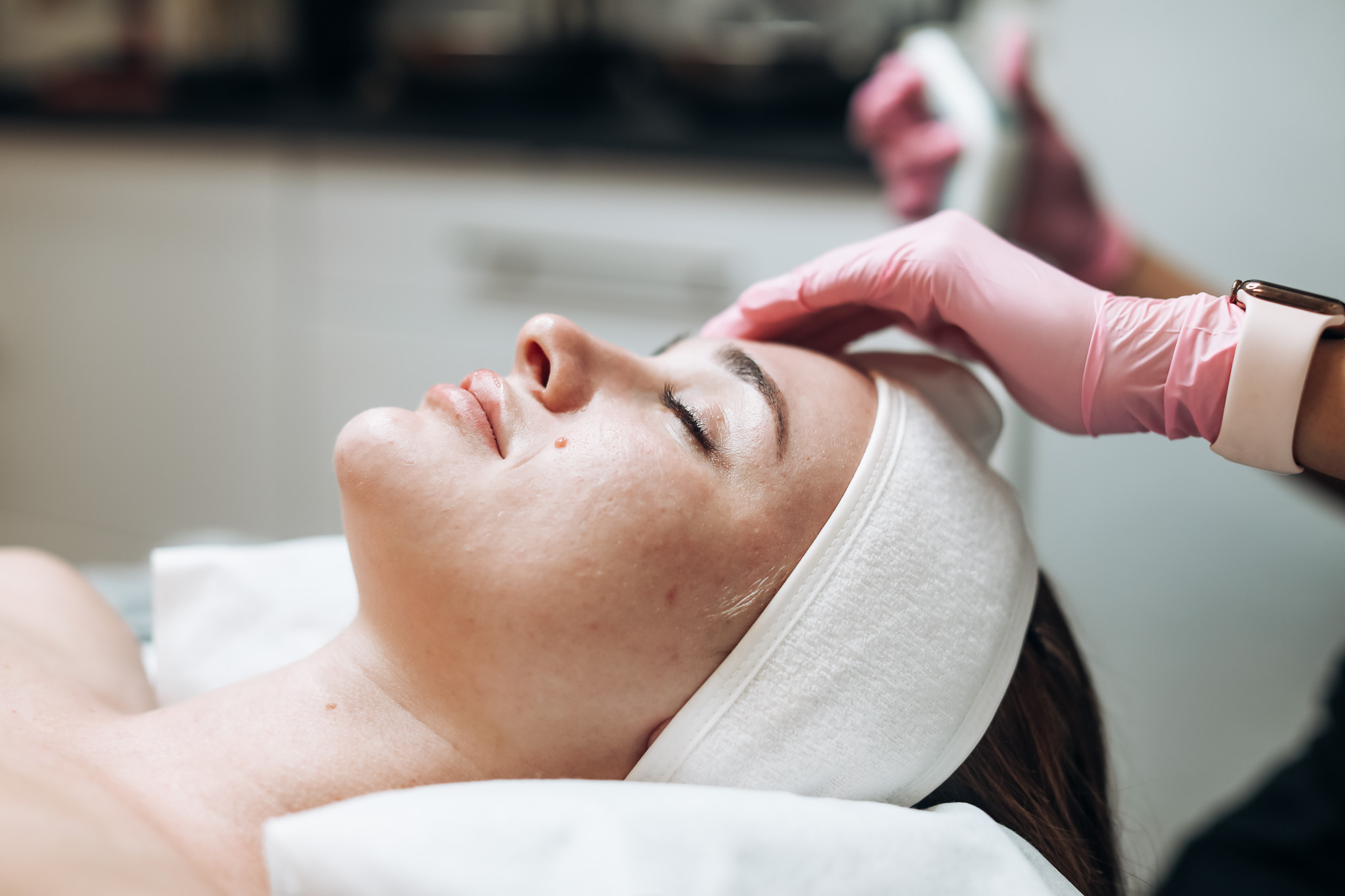
Facials in Scottsdale That Treat Your Skin, Not Just Relax It
A 90-minute facial built on a skin assessment, with a home routine that keeps the results going.
Many facials are built to relax you. Mine is built to change something: acne, dark spots, dullness or sensitivity. If you’re looking for a facial in Scottsdale that starts with your skin instead of a menu, this is how we do it. I’m Nurse Bea, an Aesthetic Registered Nurse and Licensed Aesthetician.
Facials here are done by me or by a certified aesthetic registered nurse who is also a Certified Laser Technician on my team, following my protocol. Our Medical Director, Abbey Jensen, MSN, FNP-C, provides medical oversight.
Schedule your free consultation — new clients hold their spot with a $50 deposit, credited to treatment or products, or refunded on request. Call (480) 405-0100 · 7054 E Cochise Road B100, Scottsdale, AZ 85253.











What is a facial?
A facial is a professional skin treatment that includes cleansing, exfoliating, moisturizing and other steps customized to your skin type and needs. Ours takes 90 minutes and is built around one question: what does your skin need right now?
What’s the difference between a medical facial and a spa facial?
A spa facial is mostly about relaxing, while a medical, or corrective, facial is about treating something specific. Mine starts with a skin assessment, and every step after that is chosen for what I see.
- Skin assessment first. I look at your skin, then choose the peel, mask and LED for it.
- Built for a concern. Acne, dark spots, dullness or sensitivity, not just relaxation.
- Extractions only when they’re safe, and no fragrance. I extract a blemish only if it will come out easily once the skin is softened; one that could leave a scar is treated instead, because squeezing takes proper technique to avoid scars, more noticeable acne and infection. Fragrance can irritate skin (more on that below).
- A home routine. Every facial ends with a plan for home, because what you do every day drives the results.
Are facials worth it?
They’re worth it when they treat a specific concern and come with a home routine. And if your routine already includes a prescription retinoid, you may not need regular facials at all.
Tretinoin, a prescription retinoid, helps keep pores from clogging, evens out skin tone and reduces fine lines; our Medical Director or your dermatologist can tell you if it’s right for you. A facial’s steps can help too, but the results of a light peel are subtle and build with repeat treatments.
How often should you get a facial?
It depends on your goal and your home routine. If you’re working on a concern like acne or dark spots, we plan the spacing at your consultation; if you’re maintaining, you’ll need them less often, or not at all if a prescription retinoid is already doing the work.
For reference, a light peel used to treat something is usually repeated every two to five weeks.
How long does a facial take?
Ours takes 90 minutes, and if you’re new to us, plan on about 60 more: every new client gets a complimentary in-depth consultation first, and it can take up to an hour. Here’s what happens in the 90 minutes:
| Step | What it does |
|---|---|
| Skin assessment | Decides which peel, mask and LED your skin gets |
| Cleanse | Clears makeup, oil and sunscreen |
| Dermaplaning or microdermabrasion, when your skin needs it | Deeper exfoliation: one, both or neither, depending on your goal and your skin (see the FAQ) |
| A light chemical peel | Exfoliates; peels are used for dull skin, uneven tone, fine lines and some types of acne |
| A targeted mask | Masks can help moisturize and strengthen your skin barrier |
| 30 minutes of LED light | Red light may reduce inflammation, and blue light may target acne bacteria |
| Your home routine | Keeps the results going between visits |
Can a facial help acne?
It can help as part of an acne plan, not on its own. A peel helps remove the dead skin cells and excess oil that clog pores, and blue and red light can treat pimples, though not blackheads, whiteheads or cysts.
That’s why acne clients always leave with a home routine, and why I only extract what’s ready: picking and popping raise the risk of scarring and dark spots, so a blemish that could scar is left alone and treated instead. For the full plan, see my guide to acne treatment in Scottsdale.
Can a facial help dark spots?
A facial’s light peel can brighten dull skin and uneven tone, but treating dark spots starts with sunscreen, every day. Deeper spots fade slowly, and age spots often respond faster to laser.
If your spots are from the sun, see my guide to laser skin resurfacing; if it’s melasma, start with my melasma guide. A spot that’s new or changing should be checked by a dermatologist first.
Is a facial OK for sensitive skin?
Yes. Ours is fragrance-free, because fragrance is one of the most common causes of allergic skin reactions, and the assessment decides how gentle each step needs to be.
If you have rosacea, tell us: heat and exercise can trigger flares, and so can products with glycolic or lactic acid. The first time you have any facial treatment with us, I use only the gentlest chemical peel, a hydrating, soothing mask and LED, and that can change once I’ve seen your skin at your consultation.
What should you do after a facial?
Wear sunscreen every day, skip heat and sweating for 24 hours, and pause retinoids for 3 to 7 days. Those are my rules for every facial client.
That means no workouts, saunas or hot showers the first day. The AAD also says to apply sunscreen every day after a peel.
How much is a facial in Scottsdale?
Our 90-minute facial is currently $179, with the assessment, dermaplaning or microdermabrasion when your skin needs it, the peel, mask, 30 minutes of LED, a home-care plan and a post-care kit if your skin needs one included. The new-client consultation is free, and nobody here works on commission.
New clients hold their spot with a $50 deposit that goes toward treatment or products, or is refunded on request; it’s kept only for a no-show.
Looking for a facial in Scottsdale?
We’re at 7054 E Cochise Road B100, Scottsdale, AZ 85253, on the Paradise Valley side of Scottsdale. We see clients from Phoenix, Arcadia, North Scottsdale, Fountain Hills, Cave Creek and Tempe; hours are Monday to Friday 10am to 6pm and weekends 11am to 5pm, by appointment.
Schedule your free consultation or call (480) 405-0100. Not sure where to start? See how a consultation works.
More questions I get about facials
Sometimes. If a breakout is the kind that comes out easily once the skin is softened, yes; if extracting it could leave a scar, I leave it alone and treat it so it clears on its own, because squeezing raises the risk of scarring and dark spots. Not every blemish is extractable, so if you’d like extractions, add it to your booking notes.
When your skin needs it, at no extra cost: I may use dermaplaning, microdermabrasion, both or neither, depending on your goal and your skin. Dermaplaning removes the fine “peach fuzz” hair and leaves skin a little smoother, shaving doesn’t change how thick hair grows back, and it can irritate active acne, which is why it isn’t part of every facial. Microdermabrasion gently exfoliates the skin and is used for a dull complexion, uneven tone or texture and dark spots. If you’re hoping for either one, add it to your booking notes so we can prepare.
It can. After a light peel, skin can be red for 1 to 7 days, and some flaking can follow for 3 to 7 days.
Yes. The facial is built on your skin assessment, so it works the same way for anyone.
Written by Beatrice Moorefield, RN, LE, LSO — aesthetic registered nurse, licensed aesthetician, skin health educator, and founder of Skin With Bea Esthetics, Scottsdale.
Disclaimer:
The information provided on this website is for general informational purposes only and is not intended as a substitute for professional medical advice, diagnosis, or treatment. Always seek the advice of a qualified healthcare provider with any questions regarding a medical condition or treatment. The content on this website is not intended to diagnose, treat, cure, or prevent any disease. Use of this information is at your own risk. We are not responsible for any adverse effects or consequences resulting from the use of any information provided.